
Longview City Unclaimed Money Records
Longview unclaimed money searches usually start with Washington's state portal, then move to the city's finance and records pages when the clue looks local. That approach works well in Longview because the Finance Department handles routine city payments, the police department has its own property auction process, and public records requests can help reconstruct older files when a person only has a partial name or an old account clue. If the record is financial, the city finance office is the best local contact. If the item is physical, the police process matters more. Either way, the state database is still the main place where reported property ends up.
Longview Unclaimed Money Basics
The Washington Department of Revenue portal at ucp.dor.wa.gov is the official starting point for Longview unclaimed money searches. That portal is where Washington holds reported property under RCW Chapter 63.30, the current unclaimed property law. If the state has a file for your name, you can search by name or business name and then narrow the result by city or zip code. If the Department mailed a postcard, the Property ID route is usually the fastest way to match the record.
Longview's local context still matters because city systems can create the original record. The Finance Department is at 1525 Broadway, Longview, WA 98632, and the city lists finance phone 360-442-5099. That office handles administrative financial work, including accounts payable and customer service functions, so it is the right place to start when a missing payment looks like a city check, utility balance, or tax-related record rather than a private holder issue.
| State portal | ucp.dor.wa.gov |
|---|---|
| Finance Department | 1525 Broadway, Longview, WA 98632 |
| Finance phone | 360-442-5099 |
| Police records | 1351 Hudson St, Longview, WA 98632 |
Longview Unclaimed Money Images
The official Longview city website at mylongview.com is the broadest city source for finance, police, and public records contacts before you move into a claim or request.
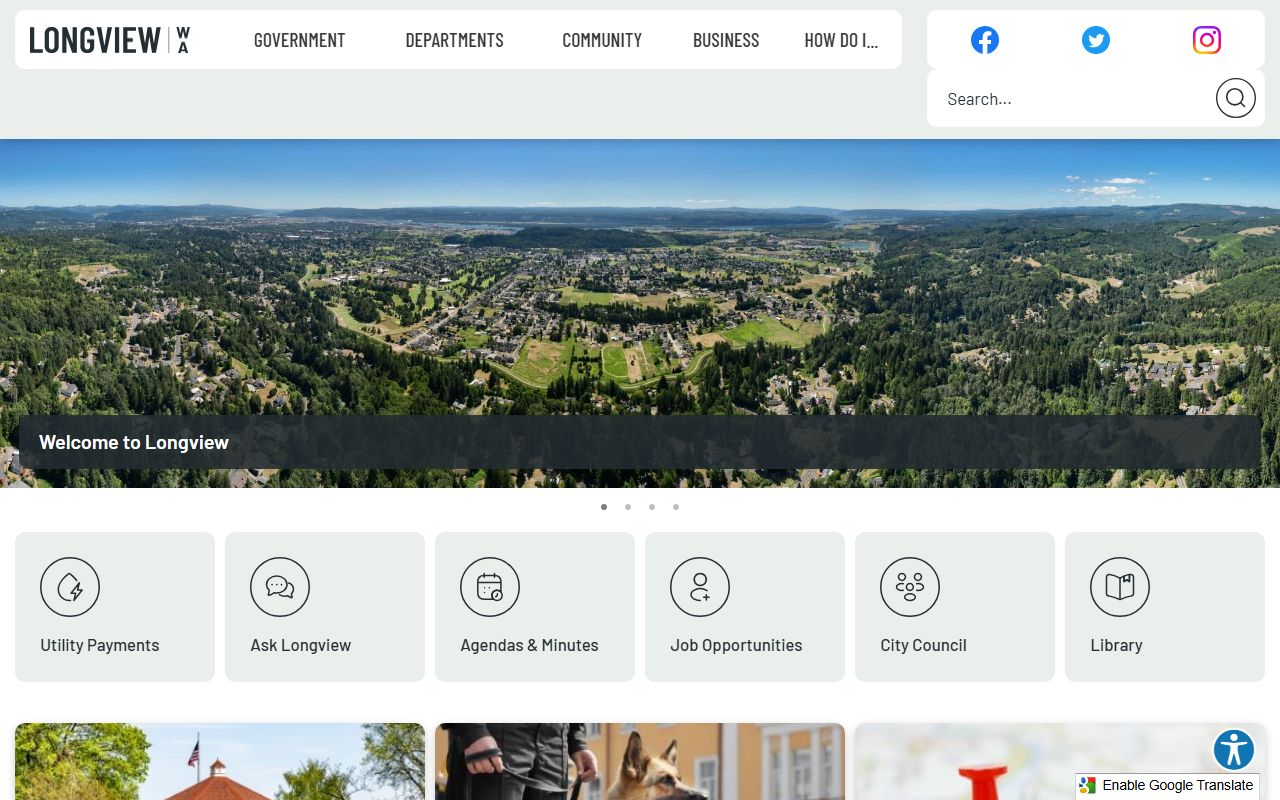
That home page is useful because it points you to the department that actually created the record instead of forcing every search through one generic office.
Finance and City Hall Records
Longview Finance is the best local office for an unclaimed money trail that starts with a city payment. The department handles administrative direction for city finances, and its accounts payable functions show that it regularly issues checks and maintains payment records. If the amount you are chasing came from a city invoice, utility billing, or tax-related interaction, finance is the office most likely to have the original paper trail.
The Finance Department's city hall location at 1525 Broadway also appears in utility billing materials, which reinforces that this is where the city handles customer service for account information and payment issues. That matters because old utility credits and city account balances often survive long after the person who paid them moved away. If you know the department or the approximate year, you can often get a much better answer from finance than from the state database alone.
Longview does not present a separate local unclaimed property database in the materials reviewed, so the practical local workflow is to use finance as the source check and the state portal as the claim destination. That division keeps the search clear: the city explains the source, and Washington explains what has been reported.
Police Property and Auction Process
Longview police property follows a separate process from cash claims. The city's auction page at mylongview.com/295/Auction says the Longview Police Department auctions unclaimed property to the highest bidder in accordance with Washington State law, and that workflow lines up with RCW 63.32 for police-held property. It also says people who believe an item belongs to them must file a written claim before the auction deadline. That is a very different workflow from the Department of Revenue claim process because the item may be sold rather than held indefinitely.
The same page gives a useful local contact route: the police evidence room at 360-442-5819. If your search points to a physical item, the police evidence room is the office that knows whether it is still recoverable, already scheduled for auction, or tied to a record that needs a written ownership claim. That local step is where the property description, item list, or auction notice becomes more important than the state unclaimed property page.
For Longview, the key distinction is simple. Money and account records point to finance. Physical property points to police. When you keep those lanes separate, you are less likely to request the wrong record or miss an auction deadline.
Longview Unclaimed Money Search Steps
The best Longview unclaimed money search starts with the Washington database, then uses city records to confirm the source. Search by name first, and then refine the result with the city and zip code if the list is too broad. If you already have a state postcard, use the Property ID field because that is the quickest way to open the exact file. If the city payment was tied to a utility account or a vendor relationship, finance may have the missing clue that the state listing does not show.
When the trail leads to police property, the workflow changes. The auction page and evidence room contact are the important local sources, and the written claim deadline matters more than the state search page. In other words, do not treat a police property file like a bank account search. The item description, not just the owner's name, is often what determines whether the city can connect the record to you.
Public Records and Follow-Up
If you need backup documentation, Longview's public records and contact pages are the best official follow-up sources. The city contact page at mylongview.com/483/Contact-Us and the police report page at mylongview.com/334/Obtain-a-Police-Report show where city questions and police records questions should go. That separation is useful when you are trying to reconstruct an older record and need to know which department held it first.
Longview's police records page at Obtain a Police Report or Dispatch Record is also helpful if the item was connected to a report number or dispatch event. A claimant usually does better when the city record, the police record, and the state record are all aligned before the final claim is filed.
Longview Unclaimed Money Claims
When Longview unclaimed money appears in the state portal, the claim process belongs to Washington. That state process is where identity, address, and ownership documentation are reviewed. If the name on the file has changed because of marriage, divorce, a business closure, or an estate, the claim usually needs the extra records that prove the current claimant is the right person to receive the funds.
Longview's local sources still help with the proof. Finance can identify the original city transaction, police can identify the property record or auction path, and the public records request system can help you obtain the supporting paper trail. If you use those local records to anchor the state claim, the file is easier to approve and much easier to defend if Washington asks for more detail.
In practice, a good Longview claim is one that can answer three questions cleanly: who created the record, which office held it, and why the person filing the claim is the rightful owner. If you can answer those three questions, the remaining work is mostly document handling.
Longview Unclaimed Money Resources
For state-level help, use the Department of Revenue overview at dor.wa.gov/about/unclaimed-property-ucp along with the claim search, claim status, and FAQ pages. Those pages explain how Washington handles property once it has been reported and what documents commonly show ownership. They are the right official references when the city source has already done its part and the claim has moved into the state system.
Longview is a strong example of why records research matters before filing. The city finance office, police evidence room, and public records contacts each control a different piece of the trail. If you match the right office to the right record type, the claim usually gets resolved faster and with less back-and-forth.