
Search Washington Unclaimed Money
Washington Unclaimed Money records are handled first through the Washington Department of Revenue Unclaimed Property Program, with added local paths through county treasurers, sheriff property units, and city finance or police evidence offices when funds or property started at the local level. A Washington search can begin with a last name, business name, or a Property ID from a notice card. From there, claimants can narrow results by city and zip code, review the listed holder, and move into the claim process with documents that match the reported name and address.
Washington Unclaimed Money Overview
Washington Unclaimed Money Basics
Washington treats unclaimed money as money or other intangible property that sat too long without owner contact. The state research points to bank accounts, insurance proceeds, stocks, bonds, mutual funds, utility deposits, customer credits, and uncashed checks as common examples. Safe deposit box contents can also move into the state program, though they follow different handling rules and timelines. Real estate and vehicles are not part of the state unclaimed property database, so a searcher needs to keep that line clear when deciding where to look.
The main statewide search path is the secure Department of Revenue portal. Washington lets an individual or business search by last name, business name, or postcard Property ID. The research also notes that users can narrow results by first name, city, and zip code. That matters in Washington because many names repeat across Seattle, Bellevue, Spokane, Tacoma, Yakima, and smaller communities. A narrow search cuts down bad matches and makes the claim file cleaner from the start.
Washington also uses a Money Match program. That program attempts to return some Washington Unclaimed Money automatically by matching state-held property to public data. It is useful, but it does not replace a direct search. People still need to check the Washington database if they moved, changed names, inherited property, or think an old paycheck, utility deposit, refund, or dormant account never reached them.
This image comes from the main Washington Unclaimed Property portal, which is the first stop for most Washington Unclaimed Money searches.
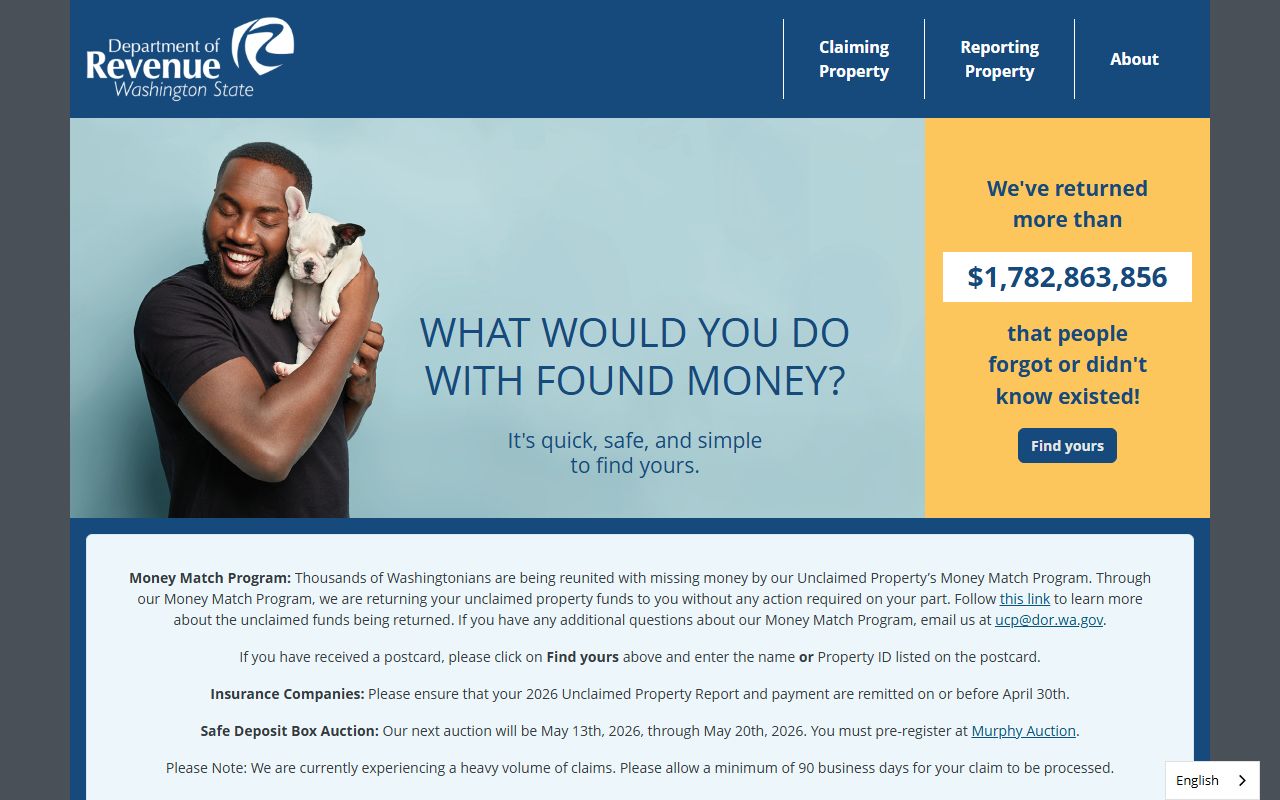
The statewide portal brings the search, claim, and upload tools together, so most Washington users start there before turning to county or city offices.
How To Search Washington Unclaimed Money
The best Washington search begins with the exact name most likely to appear in the holder's records. That may be a maiden name, a former business name, or an old address tied to a utility account. On the state claim search page, Washington tells users to enter the Property ID from a postcard if one was received. If there is no card, the user can search by last or business name and add a first name, city, or zip code to narrow the list.
Search results can show multiple Washington properties in one session. That is useful when a person has more than one stale refund, payroll check, or customer credit. The research notes that claimants can select more than one property before moving forward. It also notes that the search page is secure and keeps submitted details limited to Unclaimed Property officials for claim processing. That reduces guesswork for users who are deciding whether the listed property belongs to them.
Washington searchers should also pay close attention to the holder name. The database may list a bank, insurer, county, utility, city, or business that reported the property. That clue helps a claimant pull the right support papers. A utility deposit may call for an old bill. A payroll item may call for an old pay stub or employer record. A county warrant may call for identification plus proof that the claimant was the payee named in the local record.
The screenshot from the official Washington claim search form shows the fields used for Property ID, last or business name, and narrowing by city or zip code.
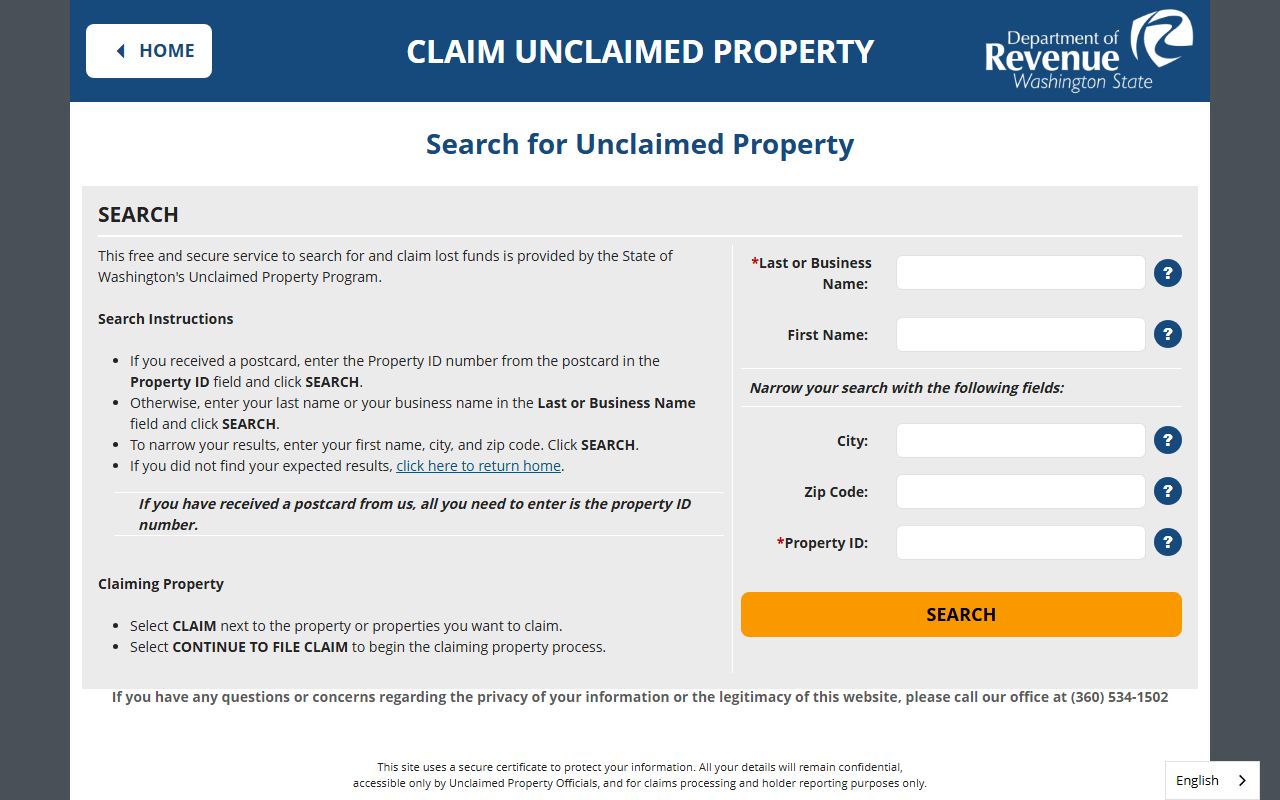
The search form is simple on purpose. Washington wants people to search first, then attach the right proof once they find a likely match.
Washington Unclaimed Money Claim Process
After the right property is selected, Washington moves the claimant into the filing process. The research explains the basic flow well: choose CLAIM next to the property, continue to file the claim, then provide the identity and address proof needed for review. Claims can be filed by original owners, heirs, beneficiaries, and in some cases a personal representative for an estate that is in probate. That makes the Washington system broad enough for family claims, not just single-owner requests.
Claim support papers depend on the facts in the record. Washington says a claimant may need proof they did business with the reporting company if no address appears in the state file. Old receipts, statements, utility bills, and tax records can help. Name change proof matters too. The FAQ research says Washington accepts a marriage certificate, a divorce decree, or court records showing the name change. Those details make a large difference because many Washington claims stall on identity mismatches rather than lack of ownership.
The state research says Washington processes claims in the order received and that review can take up to 90 days because of volume. If more proof is needed, staff contact the claimant. Once the claim is approved, the research says the payment is mailed in about two to three weeks. That gives Washington users a realistic timeline. The system is not instant, but it is steady and it has a defined path.
The official claim status tool is useful after documents are sent in.
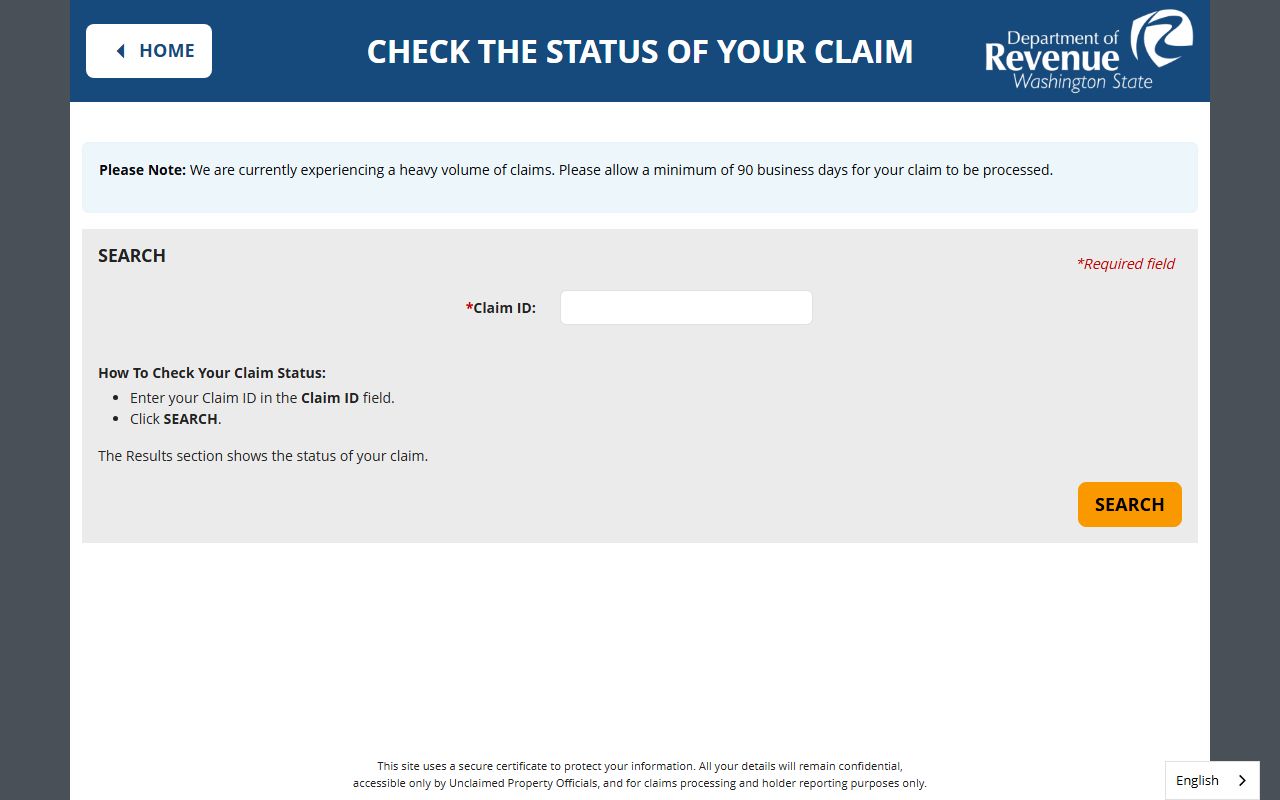
Checking status does not speed a claim by itself, but it helps a Washington claimant see whether the file is still pending or ready for payment.
Note: Washington says there is no time limit for filing a claim, so state-held unclaimed money does not expire while it sits with the Department of Revenue.
Washington Unclaimed Money Types
Washington does not limit its program to one kind of stale account. The research points to bank accounts, insurance proceeds, securities, utility deposits, payroll checks, customer credits, gift certificate questions, and safe deposit box contents. Each type can produce a different records trail. Bank and insurance items often link back to account or policy numbers. Utility deposits often tie to an old service address. Payroll claims often hinge on an old employer record and correct Social Security match.
Washington also treats dormancy periods differently by property type. Research materials describe one-year treatment for payroll and utility deposits, while many other categories move after three years. Safe deposit box contents can follow a longer timeline. A Washington user does not need to memorize each category before searching, but knowing the rough dormancy period explains why an old credit or check may only show up years after the original event.
The official What Is UCP page helps define the property types Washington accepts into the statewide system.
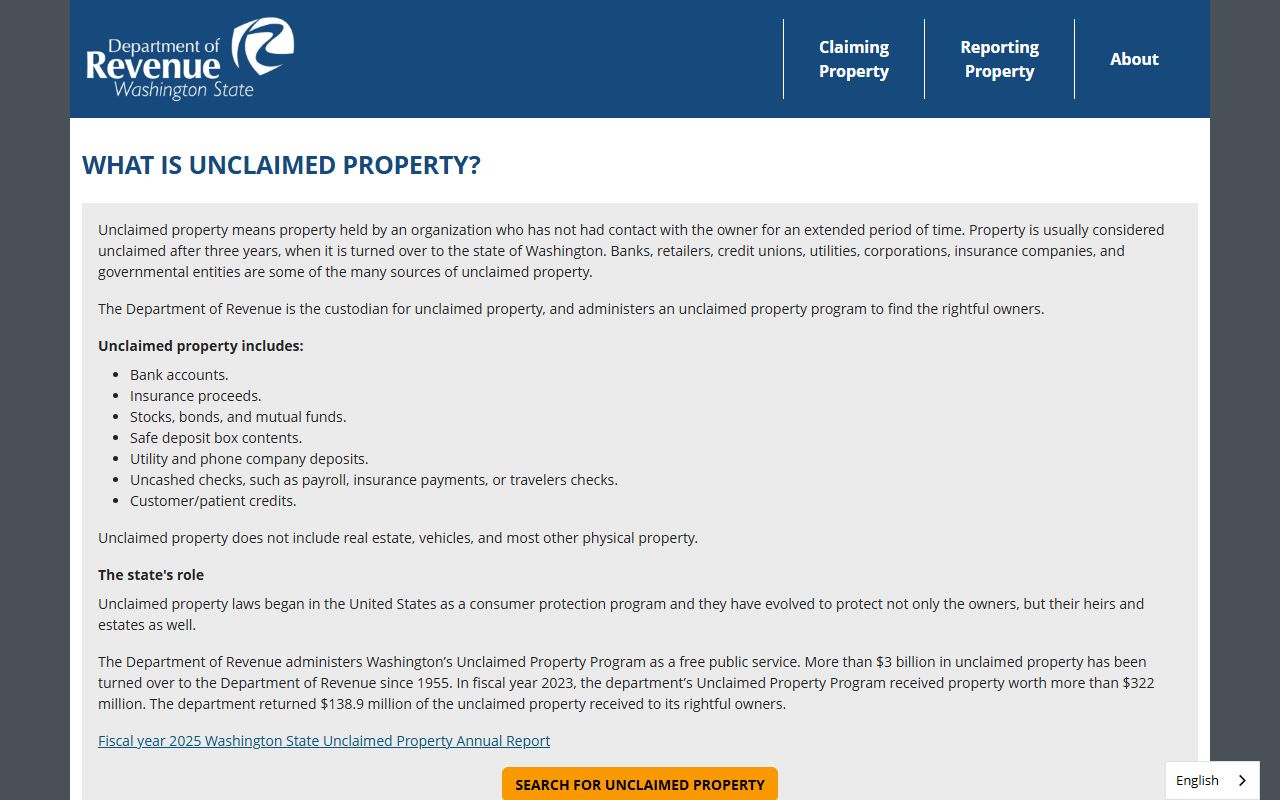
That page gives Washington users a quick explanation of what belongs in the database and what does not.
When a searcher sees a holder name tied to a county, city, or sheriff office, the state listing is often only one part of the story. Local offices may have additional public records, warrant details, evidence procedures, or notices that explain how the property first became unclaimed. That is why county and city pages in this project pair the Washington database with local treasurer, police, and records offices.
Washington Unclaimed Money Laws
Washington unclaimed property rules now sit under the official Revised Uniform Unclaimed Property Act, Chapter 63.30 RCW. That chapter governs when property is presumed abandoned, when holders must report it, and how owners can recover it. The research file contains useful statutory summaries, but some older references point to superseded law. For current Washington work, Chapter 63.30 RCW is the better source to rely on.
Local law can matter too. Property held by city police may intersect with Chapter 63.32 RCW. Property in the hands of a sheriff can intersect with Chapter 63.40 RCW. Those chapters do not replace the statewide database. They explain local handling, notice, sale, and reimbursement rules for certain items that pass through law enforcement custody before or instead of landing in the general state-held fund system.
Washington also limits finder fees. The research notes that state law caps the fee charged to locate and recover reported property. That is one reason the state keeps repeating that the official search is free. People in Washington do not need to hire a locator to search the database or file a claim. In practice, that means most owners should try the official state system first, then use county or city public records channels if the holder name points to a local office.
This screenshot comes from the page covering current Washington statutory authority for unclaimed property.
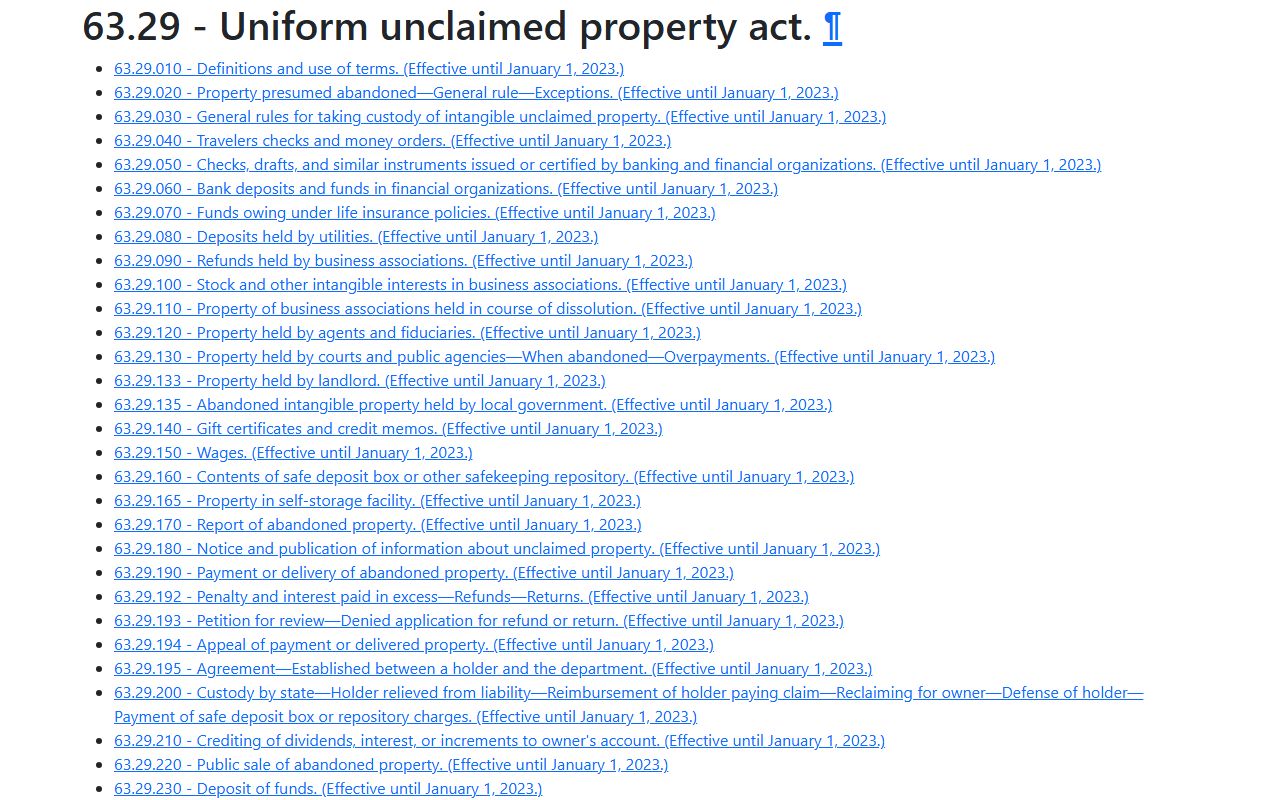
Law pages are most helpful when they are used to confirm procedure, dormancy, and claim rights, not as a substitute for the Department of Revenue search tools.
Washington Unclaimed Money Help
The Washington Department of Revenue gives claimants several direct support paths. The research lists claims support at `ucp@dor.wa.gov` and phone support at `360-534-1502`, with claims on option 1 and holder reporting on option 2. Claims mail goes to P.O. Box 47477, Olympia, WA 98504-7477. The state also keeps a separate Seattle mailing address for another program function. For users, the key point is simple: Washington has one main agency in charge of state-held unclaimed money, and that agency offers search, status, document upload, and FAQ tools in one place.
The Department of Revenue overview is useful when a person wants a broad explanation before searching. It summarizes who reports property, who can claim it, and which property types are covered. The state FAQ is better when the issue is more specific, such as proving an old address, filing as an heir, or dealing with a name change. Those are common sticking points, and Washington addresses them directly rather than leaving claimants to guess.
The image below links to the official Department of Revenue information page that explains how Washington runs the program.
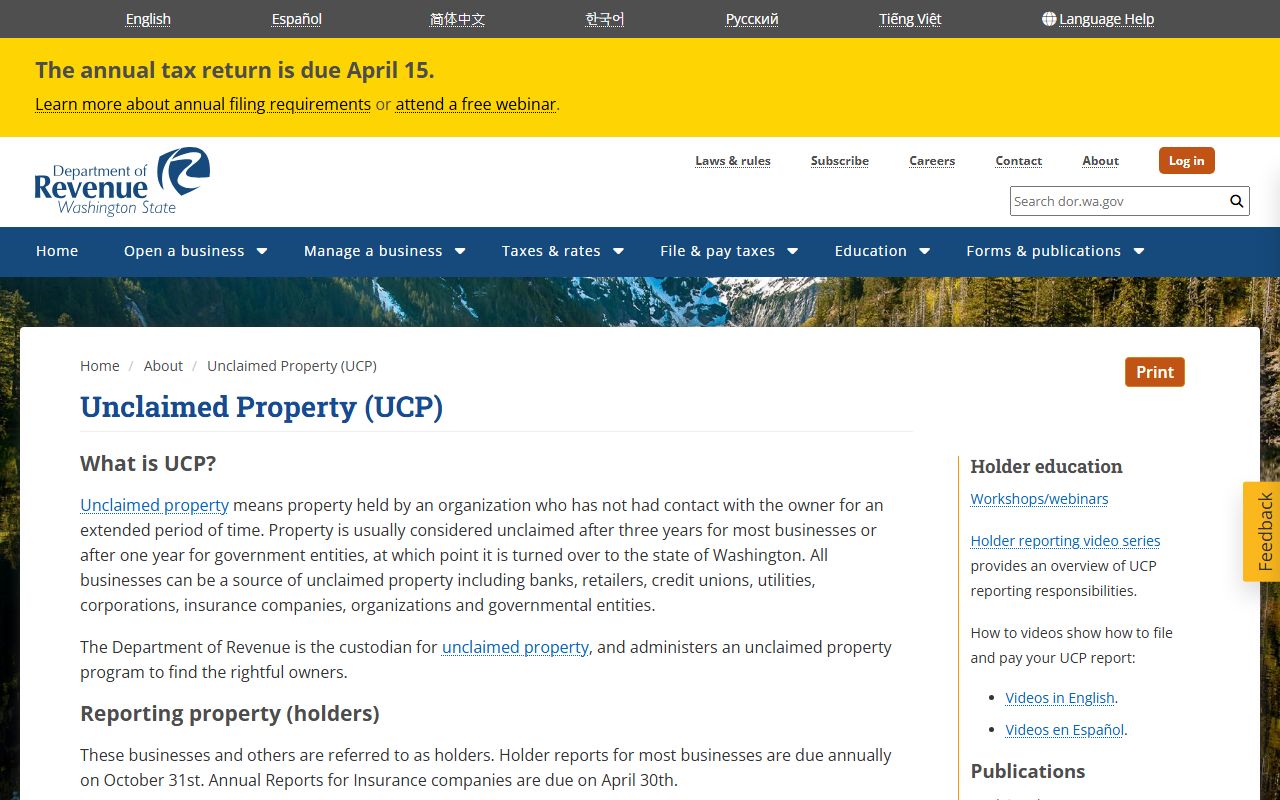
That page works well as a Washington starting point when the claimant knows the topic but still needs the right agency contact and a plain-language description.
The official FAQ page is also worth using before sending in a weak claim packet.
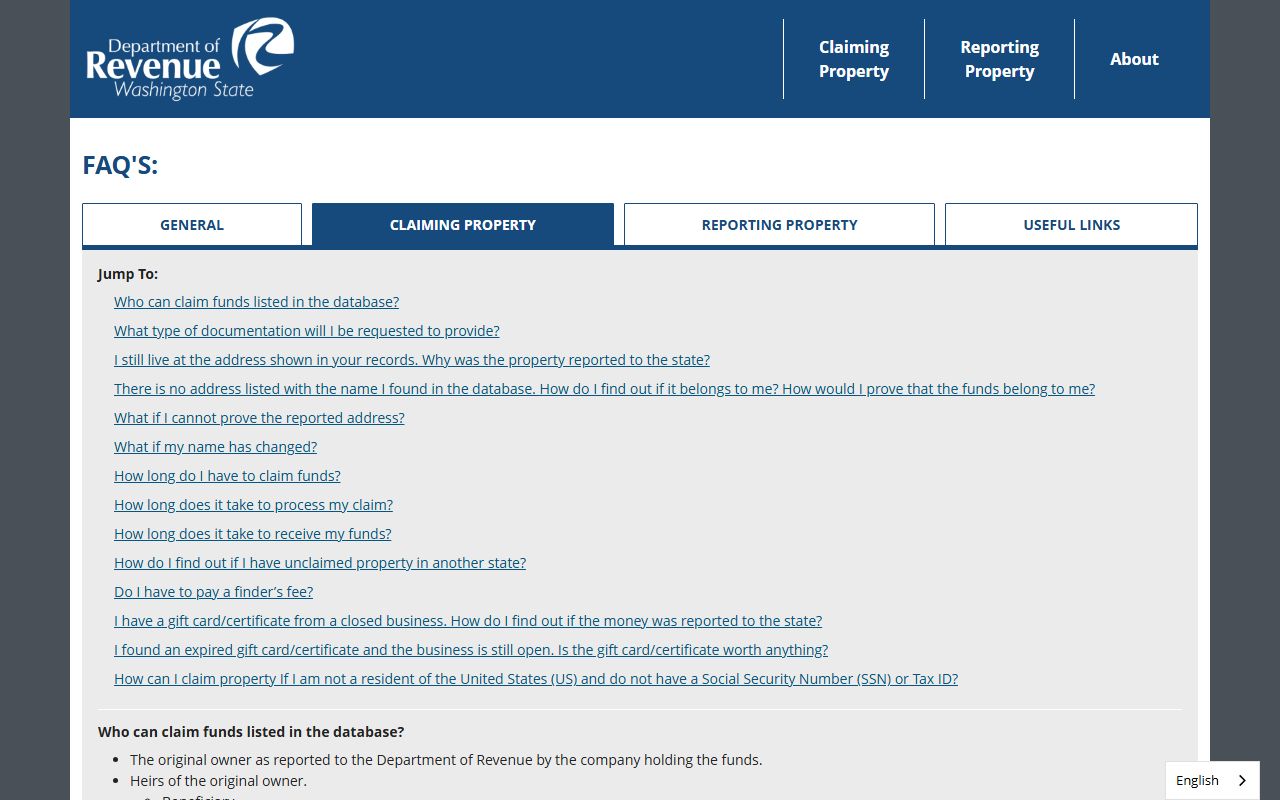
Many Washington claims can be strengthened just by matching the listed holder with old records before the documents are uploaded.
Washington Unclaimed Money Forms
Some Washington claims can be completed fully through the online system, but forms still matter. The state keeps a dedicated unclaimed property forms page for users who need a specific document, supplemental instruction, or a holder-related form. Claimants should read the record closely before downloading a form because not every property type needs the same proof. A routine owner claim is not the same as an estate claim, and a local warrant issue is not the same as a dormant bank account.
At the county and city level, Washington users may also need public records request forms, warrant reissue requests, or property release instructions. Those local forms do not replace the state claim system. They help a person gather proof that matches the state or local listing. This is especially useful when the holder is a county treasurer, sheriff office, or city department and the state result shows only a brief summary.
The official forms page is shown here.
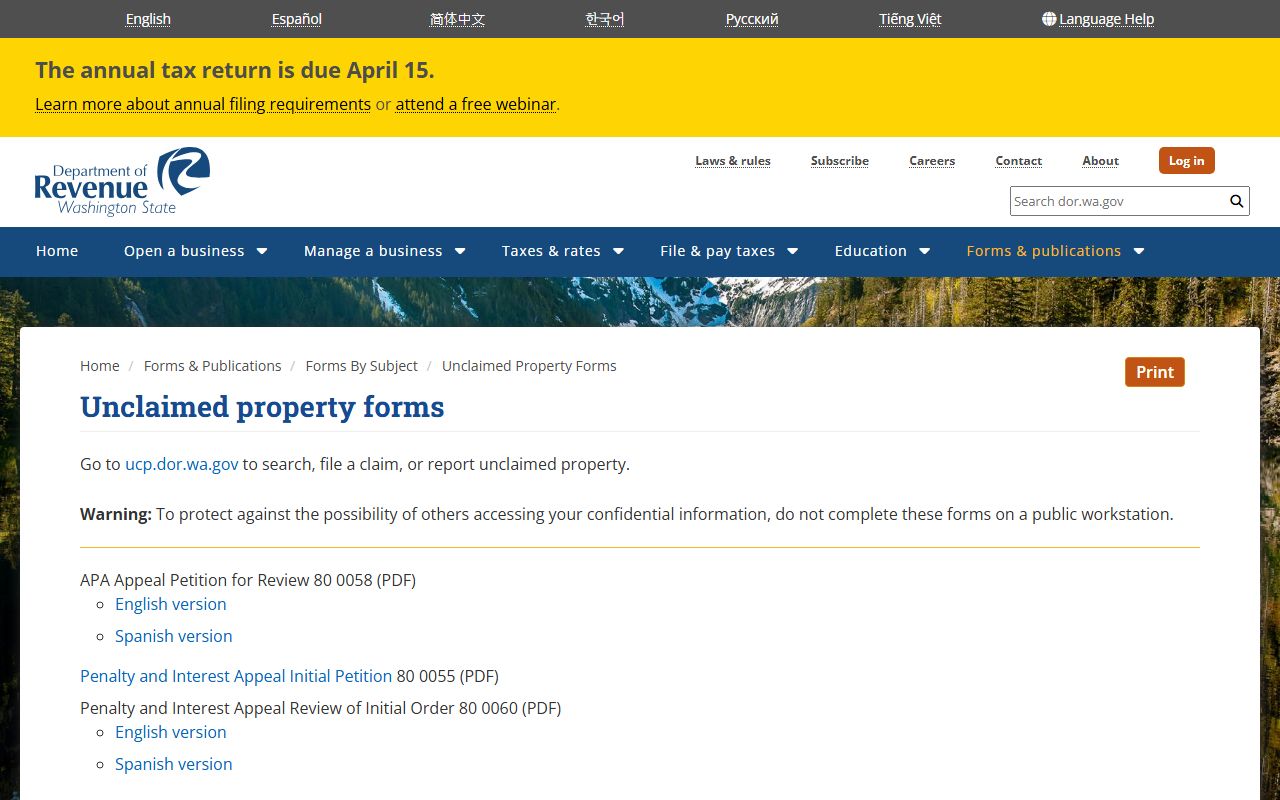
Washington keeps the forms in one place so claimants do not have to search several agencies before starting a file.
Washington Unclaimed Money Reporting
Businesses, utilities, insurers, financial institutions, and government entities all feed the Washington unclaimed property system. The research says holders report property each year by October 31, and that due diligence notices generally go out between May 1 and August 1 for qualifying amounts. That reporting cycle helps explain why some Washington names appear in batches and why older funds from the same holder can hit the database around the same time.
Washington also offers free holder education workshops. Those workshops are aimed at reporting entities, but they still help the public understand how Washington gathers data and why some holders may list property with limited owner detail. The workshops and training materials show that the state takes reporting compliance seriously, which is part of why the search database covers so many types of property and so many reporting entities.
This image links to the official Washington holder education page.
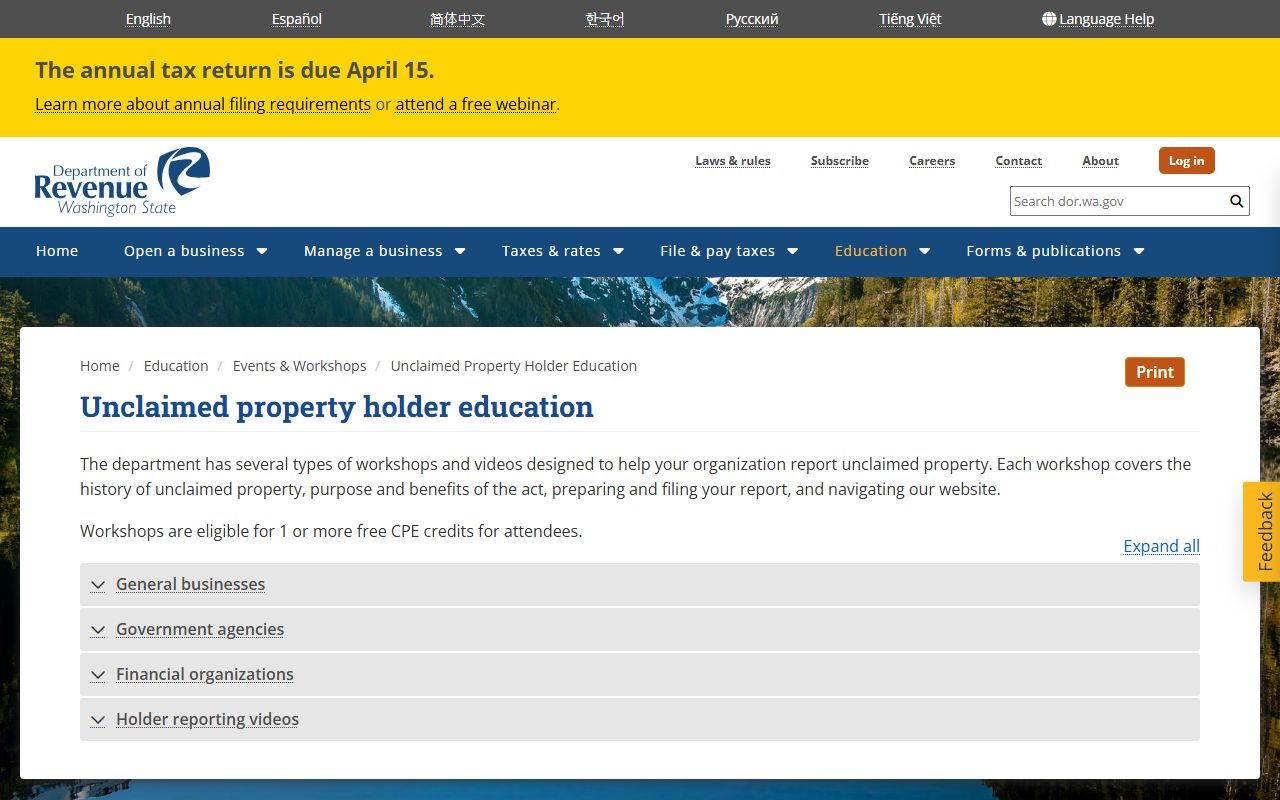
Even though workshops are aimed at holders, they give Washington users a clearer sense of how property enters the system and why documentation standards matter.
Washington Unclaimed Money By County
County pages in this Washington project focus on treasurer offices, county warrant procedures, sheriff property contacts, and local records sources that can support a state claim. Start with the county where a check, refund, warrant, or local property issue most likely began.
Washington Unclaimed Money In Cities
City pages help when the holder was a local finance department, municipal police property room, or another city office. They also point back to the county and statewide tools that Washington residents usually need for a complete search.