
Lynnwood Unclaimed Money Records
Lynnwood unclaimed money searches usually begin with Washington’s state portal, but the city’s Administrative Services records can help you understand where a municipal payment, receivable, or allowance for uncollectibles first appeared. That local context matters because a city check, refund, or other account entry may start in a Lynnwood finance report before it is ever visible in the state system. If the lead turns into police-held property instead of cash, the record type changes again and the city’s property procedures become the right next step. The fastest path is to match the clue to the office that actually handled it.
Lynnwood Unclaimed Money Search
Start with the Washington Department of Revenue portal at ucp.dor.wa.gov. That is the state’s official home for reported property, and it is the most direct place to see whether a Lynnwood name, former address, or business has already been turned over by a holder. Washington’s current unclaimed property law is in RCW Chapter 63.30, so the state process, not city hall, controls the claim once the item is reported.
The city website at lynnwoodwa.gov is the best local companion to the state search because it gives you the city’s own department structure and contact pathways. When a search result looks municipal, Administrative Services is the office most likely to explain whether the original record was a city payment, a receivable, or another accounting entry that later aged out of the normal payment cycle. The state portal tells you whether the property is already reported; the city records help you prove why the record belongs to you.
If you are working from a postcard, the Property ID route on the state site is the shortest path. If you are working from a name, the last-name search and the city filter are the better starting points. Lynnwood search results are easier to sort when you keep the record type in view, because a vendor payment, a payroll-style item, and a personal account balance all move through different proof patterns even though they may end up in the same state database.
Lynnwood Finance Records
Lynnwood’s Administrative Services reporting is the local detail that makes this page different from a generic Washington search page. The city’s financial reports track receivables by fund type, and the research notes specifically call out accounts receivable and an allowance for uncollectibles in the General Fund. That is useful when a missing item looks like a city balance rather than a private account because it tells you the city is tracking the numbers through its normal financial statements, not through a one-off property list.
Those same reports also show how a city item can disappear from day-to-day use without disappearing from the paper trail. If a check was issued and never cashed, or a receivable stayed open until the city treated it as uncollectible, the record still leaves a trace in the accounting system. That trace is often what a claimant needs when the state search result is close but not obvious. Lynnwood residents who have old invoices, refund notices, or vendor paperwork should keep the original city clue in mind because the finance record can be the bridge between the old transaction and the current claim.
Administrative Services also helps explain why the local and state records should be read together. The state portal tells you whether a holder reported property to Washington. The city financial reports tell you what kind of municipal asset or receivable existed before it left the city’s books. When those two pieces line up, the search is much cleaner than trying to identify the property from the state file alone.
Lynnwood Unclaimed Money Images
The Lynnwood city website at lynnwoodwa.gov is the most useful official visual reference because it leads to the city’s current departments, notices, and service pages.
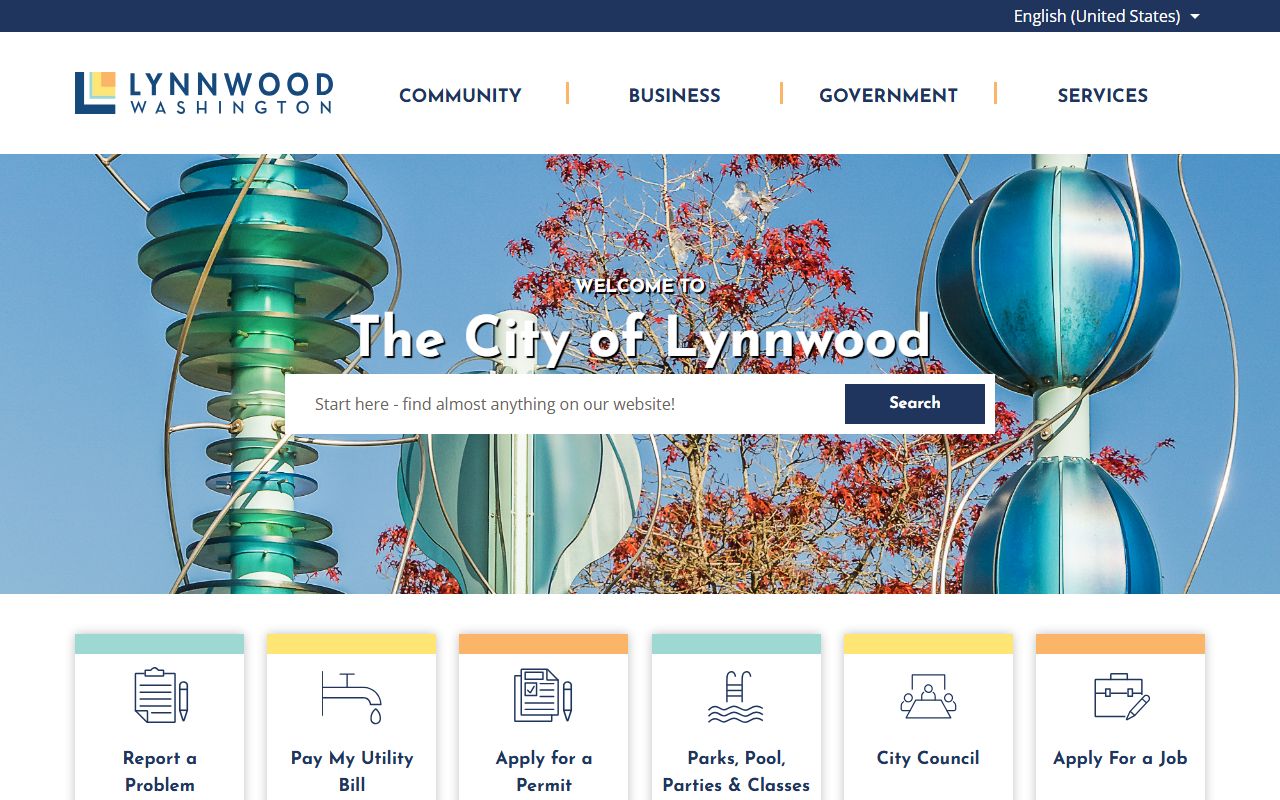
That homepage is useful when you need to confirm whether a finance question, a records question, or a police question belongs with the city before you move into the state claim system.
If your search is about a state-reported item, the Washington portal at ucp.dor.wa.gov stays the main source for the actual claim record. The city image and the state portal work together: one gives you the local office map, and the other gives you the statewide property database. That combination is often the quickest way to connect a Lynnwood name to the right file.
Lynnwood Police Property
Lynnwood police property follows the city-police route, not the state unclaimed property route. The research notes say standard RCW 63.32 procedures apply, and that the city does not list a separate online property database. That means a wallet, phone, keys, evidence item, or other physical object needs to be treated as police-held property first and as unclaimed money only if the record later turns into a financial claim.
That distinction matters because the release rules for physical property are about custody, identification, and disposition, not about a holder report in the Department of Revenue system. If you are trying to recover something tangible, the exact object description and any case reference matter more than a name search. A police-held item can sit in the city system even when no cash has ever been reported, so a broad unclaimed money search is not enough on its own.
For Lynnwood, the useful habit is to separate the financial trail from the custody trail. Cash and account balances belong in the state portal. Physical items belong in the police process. Once you know which category applies, you know whether to focus on finance records or on the evidence and release steps.
Lynnwood Unclaimed Money Claims
When Lynnwood unclaimed money appears in the state database, the claim itself stays with the Department of Revenue. The search pages and claim pages are designed for owners, heirs, and business representatives who need to prove a connection to the reported property. The strongest files usually include government ID, current address information, and supporting paperwork that ties the claimant to the owner name. If the owner name changed through marriage, divorce, or a court order, those records help explain the gap.
The state claim status page at ucp.dor.wa.gov/app/claim-status-search is the best place to watch a filed claim, while the FAQ at ucp.dor.wa.gov/app/faq-claim explains the common proof requests. That is especially helpful if your Lynnwood lead started as a city payment, because the city finance record may show the check number or accounting source that connects the local transaction to the state file. The more closely the documents match, the easier the claim is to move forward.
The state FAQ also says there is no time limit for filing a claim. Older Lynnwood records are still worth checking even if the address is gone or the business closed years ago. The state keeps the property until the rightful owner comes forward, so an old city clue can still become a current claim if the documentation is in order.
Lynnwood Unclaimed Money Follow-Up
If a Lynnwood claim needs more documentation, the city website is the right place to confirm which department should answer the question. The city’s own records are useful when you need to verify a payment source, a department name, or an accounting trail before you file a state claim. When the issue is broader than a single payment, Washington’s Public Records Act at RCW 42.56 gives you the legal path for asking the city for supporting documents.
A focused request usually works best. One owner name, one check range, one fund type, or one year of records is easier for staff to search than a broad request that mixes unrelated clues. That approach is practical in Lynnwood because the finance records already show the kind of detail a claimant needs: fund-based accounting, receivables, and an allowance for uncollectibles. Those records help you prove that the state entry matches the city trail.
In the end, Lynnwood unclaimed money searches work when the record type and the office line up. State-reported money belongs in the Department of Revenue system. Finance records explain the municipal source. Police property follows RCW 63.32. Once you keep those tracks separate, the claim process becomes much more manageable.