
Pullman Unclaimed Money Records
Pullman unclaimed money searches have to start with one basic distinction: city Pullman and Washington State University are separate jurisdictions. A city payment, refund, or local record belongs on the Pullman city side, while campus property and evidence belong to Washington State University Police. That split matters because the same owner name can appear in two different systems, and each system follows its own release and reporting path. Start with the Washington state portal for money, then use the Pullman city site or the WSU police page to confirm which office actually created the record.
Pullman Unclaimed Money Basics
The Washington Department of Revenue portal at ucp.dor.wa.gov is the main place to search for Pullman unclaimed money, and Washington’s current unclaimed property law is in Chapter 63.30 RCW. That is the statewide system for cash, credits, and other intangible property that has already been reported by a holder. For Pullman, the key is knowing whether the holder was the city or Washington State University. If the record came from city business, the city website is the best local confirmation step. If it came from campus police, the university police property process is the right one.
The city website at pullmanwa.gov is still useful even though the city page did not produce a manifest image here. It is the official city entry point and the place to confirm local departments, contact pages, and city-side records before you move into a claim. Pullman city proper does not absorb the university records, so a search that starts with the city but ends in university police is not unusual. The whole point is to match the holder to the right jurisdiction before you file anything with Washington.
| State portal | ucp.dor.wa.gov |
|---|---|
| City website | pullmanwa.gov |
| Campus police | police.wsu.edu |
| Jurisdiction note | Pullman city proper and WSU use separate records and property workflows. |
Pullman Unclaimed Money Images
The Washington State University Police Department page at police.wsu.edu is the most useful local image source because campus property is the main Pullman-specific workflow with a visible public process.
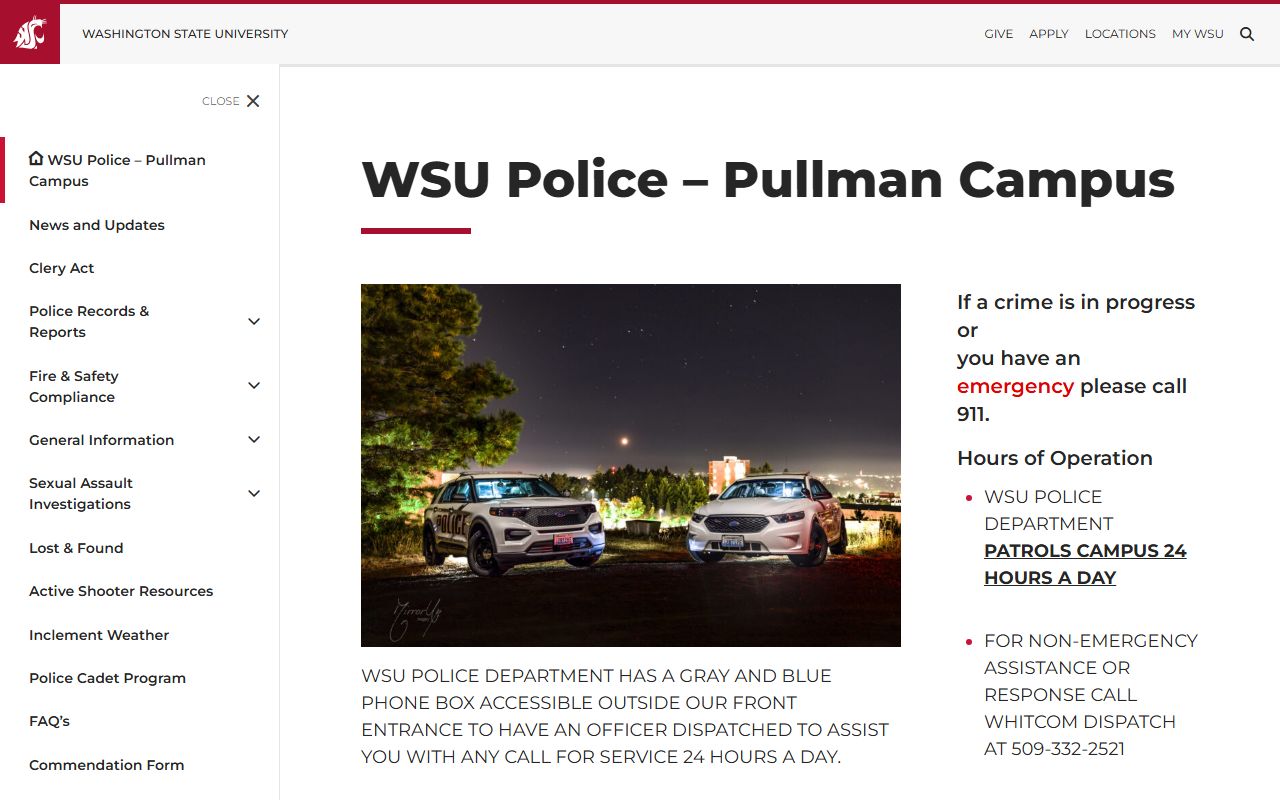
That page is relevant when the record is tied to campus property or evidence rather than a city account or a state-held cash claim.
The Washington unclaimed property portal is the broader state reference that finishes the money-search side of a Pullman search.
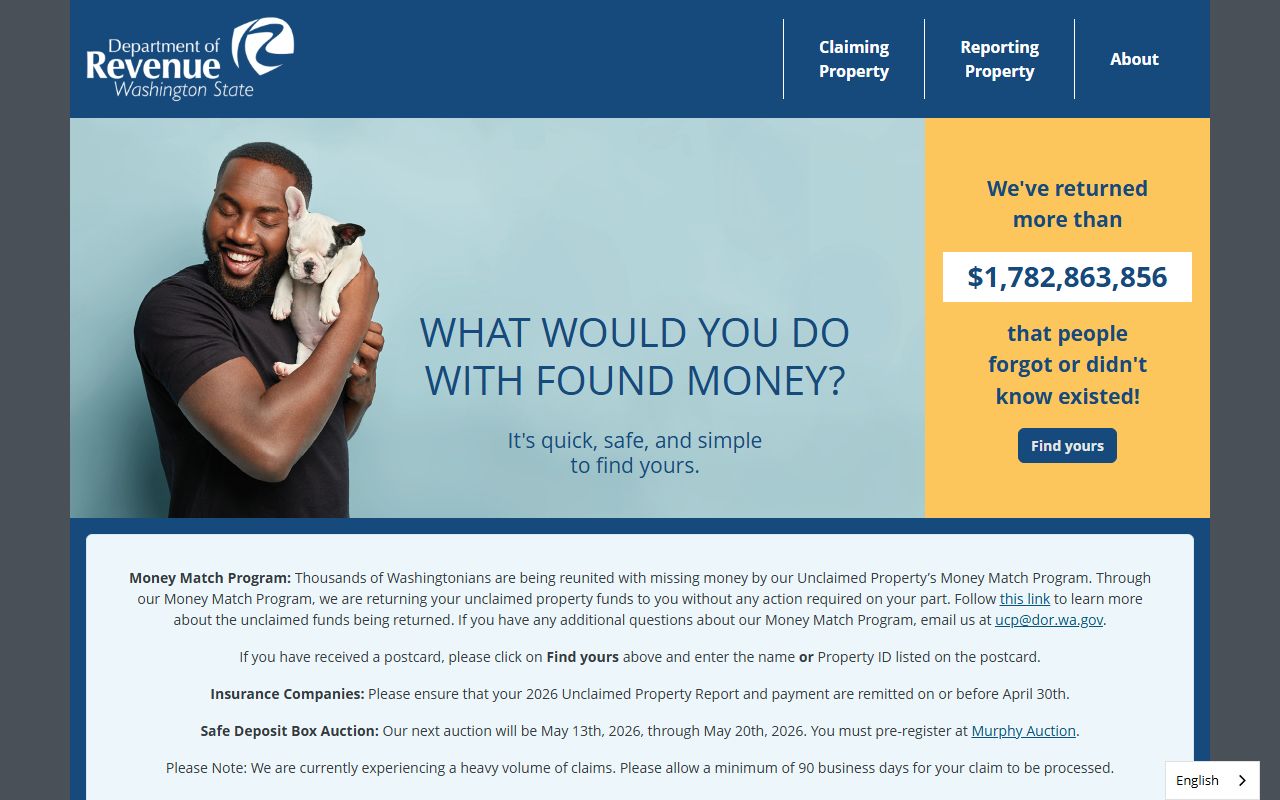
Using both together makes the jurisdiction split easier to see: Pullman city records for city matters, WSU police records for campus property, and the state portal for reported money.
Pullman Unclaimed Money Search Steps
Start the money search with the state claim search at ucp.dor.wa.gov/app/claim-search. Search by last name, business name, or Property ID if you received a postcard. Then use first name, city, or zip code to narrow results. That works well in Pullman because a campus address, a city address, and an older local address can all point to different holders even when the owner name is identical. The state page is the only place where the reported property itself is listed for claim filing.
If the clue points to a city payment, use the Pullman website to identify the correct city department before you assume the item is in Washington’s database. If the clue points to campus property, use the university police page instead. The search does not become clearer by mixing the two jurisdictions. It becomes clearer by checking which office originally held the record and then following that office’s own process.
The state FAQ at ucp.dor.wa.gov/app/faq-claim and the claim status page at ucp.dor.wa.gov/app/claim-status-search are the follow-up tools after you find a likely match. They tell you what proof the state may want and whether a filed claim is still moving through review. For Pullman, those tools are most useful after you already know whether the record is city, campus, or state-held.
Pullman Unclaimed Money and WSU Police Property
WSU Police property and evidence follow a separate rule set from ordinary unclaimed money. The research notes that the Property and Evidence Custodian makes every effort to return personal property, attempts to identify the lawful owner, and sends written notice by US Mail within 15 days after authorized release. It also notes that unclaimed property timing is 60 days after written notice to the owner and 60 days from case adjudication for evidence. Those timeframes are campus-police rules, not the statewide unclaimed property schedule.
The disposition rules under RCW 63.32.010 are also important because they allow public auction, retention for department use, destruction, or trade depending on the item. The research further notes that firearms are disposed of under RCW 9.41.098(2) after one year. That makes the WSU property page the right reference when the item is a physical object rather than a financial account.
This distinction is the core Pullman issue. A university-issued or campus-held item does not become a city claim just because the address says Pullman. If WSU Police held it, then the notice, release, and disposition process belongs to the university police workflow. If the item is cash or another reported intangible asset, then the Washington portal is still the correct place to search and file.
| WSU Police | police.wsu.edu |
|---|---|
| Written notice | US Mail within 15 days after authorized release |
| Unclaimed property timing | 60 days after written notice, or 60 days from case adjudication for evidence |
| Firearms | Disposed under RCW 9.41.098(2) after one year |
Pullman City Unclaimed Money Claims
Once a Pullman item appears in Washington’s database, the claim itself stays with the Department of Revenue. The state wants the claimant to match the owner name or business name reported by the holder, so identity, old address evidence, and any supporting business or estate documents matter. For Pullman residents, the easiest mistake is treating a university record like a city payment or treating a city payment like campus property. The claim file is stronger when the office that created the record matches the paper trail the claimant is submitting.
Pullman city proper still matters because a local department may have created the original refund, check, or administrative record. The city website is the place to confirm whether a city office should be contacted before a claim is filed. But if the source is WSU, the university police page is the more relevant local contact. That is why Pullman searches are less about one office and more about sorting the jurisdiction first.
Washington does not impose a filing deadline for owner claims, so older Pullman records are still worth checking. A student account, a campus item, or a city payment can remain useful long after the original transaction has faded from memory. If the office, the name, and the address line up, the claim is usually just a matter of uploading the right proof and following the status page.
Public Records And Follow-Up
If you need supporting documents for a Pullman unclaimed money issue, use the city website first for city records and the WSU Police site for campus property. A narrow request works better than a broad one because it gives staff a date, case number, or department clue they can search against. That is especially useful when the same surname appears in both city and university contexts and you need to know which file is actually yours.
The Department of Revenue overview at dor.wa.gov/about/unclaimed-property-ucp is the best statewide companion page because it explains how Washington holds and returns reported property. Use it with the claim search, FAQ, and claim status tools when the money side is clear. Use the WSU property page when the item is physical and tied to campus custody. The state handles the money claim, while the campus page handles the property workflow.
Pullman searches are most successful when the claimant respects the boundary between the city and WSU. That boundary is the whole story in many cases. Once the right office is identified, the rest of the process is paperwork, proof, and follow-up.