
Sammamish Unclaimed Money Records
Sammamish Unclaimed Money searches begin with the state portal, but the city finance office and city clerk records make the search much more useful once a possible match appears. Sammamish City Hall at 801 228th Avenue SE is where the financial trail, public records trail, and ordinance trail all meet, so it is the local place to confirm whether a payment was issued by the city or whether a record has moved on to Washington. Because police services are contracted through King County, the property workflow also changes when the item is physical rather than financial. Sorting those paths early keeps the claim clean.
Sammamish Unclaimed Money Basics
The Washington Department of Revenue portal at ucp.dor.wa.gov is the official place to search Sammamish Unclaimed Money that has already been reported to the state. Washington's current unclaimed property law is in RCW Chapter 63.30, which governs the state’s reporting and claim process. For Sammamish residents, the state database is the filing path, but the city finance record usually explains how the original payment moved through local accounts before it reached the state.
Sammamish Finance is based at 801 228th Avenue SE, Sammamish, WA 98075, and the city hall page lists phone (425) 295-0500 with business hours Monday through Friday, 8:30 am to 5 pm. The finance page shows that the department handles budget development, financial reporting and audit management, financial planning support, investments and cash management, general ledger accounting, payroll, accounts payable, accounts receivable, capital assets, and inventory control. That is exactly the set of records most likely to support an unclaimed property claim.
| State portal | ucp.dor.wa.gov |
|---|---|
| Finance | City of Sammamish Finance |
| City Hall | 801 228th Avenue SE, Sammamish, WA 98075 |
| Phone | (425) 295-0500 |
Finance and Sammamish Unclaimed Money
Sammamish Finance is useful because the city’s budget materials show a clear, structured financial process. The finance page points to annual comprehensive financial reports, budget documents, capital improvement planning, financial management reports, impact fee reports, and quarterly financial status reports. Those records matter when you are checking whether an item came from a city refund, a utility payment, or another account that was later reported to Washington. The budget materials also make it clear that the city tracks property tax information closely and maintains healthy reserves, which fits a city that is deliberately managing its cash and planning data.
That context helps because unclaimed property often starts as something ordinary. It might be a city refund, a customer credit, or a vendor payment that no one followed up on. Finance can usually tell you whether the payment is still in city custody, whether it was reissued, or whether it was reported after the dormancy period. That means the finance page is not just a budget page; it is the city’s best clue for a local money search.
If the local source is clear, the claim process becomes much simpler. If the city cannot match the name or amount, the state search becomes the next reference point instead of a blind guess. That makes the finance office the practical bridge between a city transaction and a Washington claim.
Sammamish Unclaimed Money Images
The Sammamish city website is the best visual reference when you need the local government structure behind a claim. It shows the city’s service layout, finance access, and public records navigation in one place.
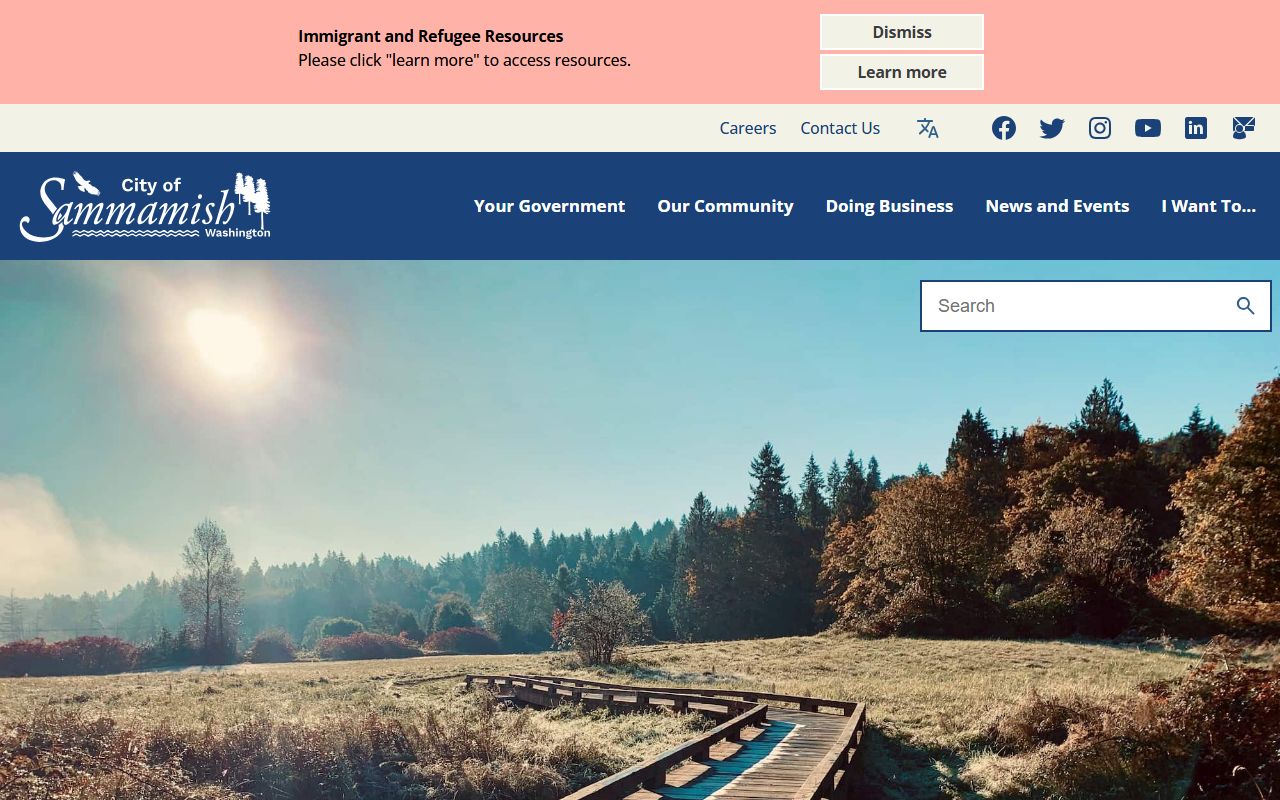
The homepage is especially useful in a contract-city environment because it helps you distinguish city finance from King County sheriff services before you start asking for records. That distinction saves time when the item is not a check but a physical property file.
City Records and Sammamish Unclaimed Money
The City Clerk is the records hub for Sammamish. The clerk page says the office manages public records requests, records retention, archiving, destruction, and disposition, and it also links to prior requests and the public record request FAQ. That makes it the right place to go when you need the document behind the claim rather than the claim listing itself. Sammamish’s regulations page also points to the Sammamish Municipal Code, which means city ordinances and adopted rules are easy to reach through the city site.
That matters because a local finance issue is often tied to a local rule. If a payment, refund, or fee was created under a city process, the municipal code page and public records request page can explain the workflow better than the state listing can. It also helps when you need to trace a payment back to the city’s administrative record before you file with Washington.
For Sammamish residents, the city clerk is often the person who can tell you where to request the supporting file. That turns a general search into a direct document request, which is usually faster and more accurate.
Search Steps for Sammamish Residents
Sammamish Unclaimed Money searches work best when you keep the city finance file, city records file, and state claim file separate but connected. Start with the Washington search if you have only a name or an old address. If the result looks promising, use the finance page to confirm whether the city issued the payment. If you need the supporting document, go to the clerk’s public records request page or the regulations page for the municipal code link.
- Search the state database first to see whether the record has already been reported.
- Use Sammamish Finance when the clue looks like a city refund, payroll item, or utility credit.
- Use the City Clerk page when you need the actual records request path or a document trail.
- Check claim status after filing so you can respond quickly if Washington requests more proof.
Because Sammamish is a contract city for police services, the record type matters even more than usual. If the search points to an item held by law enforcement, the sheriff workflow applies and the city routes police-service questions through the King County Sheriff’s Office. If it points to a city check, finance stays in the lead. Keeping those two records paths separate prevents a lot of dead ends.
King County Sheriff Property and RCW 63.40.010
Sammamish police services run through the King County Sheriff’s Office, so physical property is handled as a sheriff issue rather than a city-police issue. That means the correct rule is RCW 63.40.010, not the city-police statute used elsewhere. If the item is a wallet, firearm, phone, or other found property, the sheriff custody process controls notice, release, and any eventual disposition. That is a different workflow from the state unclaimed property claim process for money.
The King County Sheriff’s Office is the right place to look when the item is in law-enforcement custody. The county model matters because Sammamish does not run its own police property system, so the records, release rules, and any pickup requirements flow through the sheriff side. If the item is financial, the city finance office and the state portal remain the correct path.
That distinction keeps Sammamish searches organized. Money follows Finance and the Department of Revenue. Physical property follows the sheriff. Using the right lane from the start is what keeps a search moving.
Sammamish Unclaimed Money Claims
Once a Sammamish record appears in the state database, the claim still goes through Washington. The Department of Revenue will want proof that ties the current claimant to the owner in the record, and that proof can include an ID, address history, probate papers, or a name-change document. The city records help because they show the local source, and the local source often explains why the name in the database does not look exactly like the name on the current ID.
Because Sammamish maintains budget and finance documents in a structured way, it is often possible to confirm the source before the claim is filed. That can be especially useful when the record looks small or routine. A utility refund or an old city payment may not look important until the finance page shows where it came from and whether it was ever reissued.
The cleanest process is the same one used in the other cities: search the state, confirm the city source, gather the proof, and file the claim. Sammamish just adds a King County sheriff lane for physical property, which makes the record type check the first thing worth doing.