
SeaTac Unclaimed Money Records
SeaTac unclaimed money searches usually begin with Washington's state portal, but the city trail matters when the source was a city payment, a finance record under the City Manager, or a city-held property item that never belonged in a bank-style claim. SeaTac also keeps an unclaimed property page under its Legal section, so the city-side path is split between legal navigation and finance administration rather than a single public database. That makes it important to identify the office first, especially in a city where airport traffic, contractors, and frequent address changes can create records that look similar on paper but belong to different holders.
SeaTac Unclaimed Money Basics
The Washington Department of Revenue portal at ucp.dor.wa.gov is the main place to search for SeaTac unclaimed money, and Washington's current unclaimed property law is in Chapter 63.30 RCW. That is the statewide holding system for reported money and intangible property. SeaTac's local role is to show where the city-side record came from before the claim reaches the state. If the missing item started as a city refund, permit balance, or vendor payment, the City Manager's finance path is the local source that explains why the item was reported later.
City finance is housed under the City Manager at seatacwa.gov/government/city-departments/city-manager. City Hall is at 4800 South 188th Street, SeaTac, WA 98188, and the phone number is (206) 973-4800. The city also keeps a municipal code page at seatacwa.gov/government/municipal-code, which is useful when you want the local rule set behind a finance or property record. Together, those pages give you the city-side context before the state claim is filed.
| State portal | ucp.dor.wa.gov |
|---|---|
| Finance under City Manager | seatacwa.gov/government/city-departments/city-manager |
| City Hall | 4800 South 188th Street, SeaTac, WA 98188 |
| Phone | (206) 973-4800 |
SeaTac Unclaimed Money Images
Because the SeaTac city image was not usable, the clearest official visuals are the Washington state portal and its claim search form. Those pages show the actual reporting and filing path that applies to SeaTac unclaimed money once the city source has been identified.
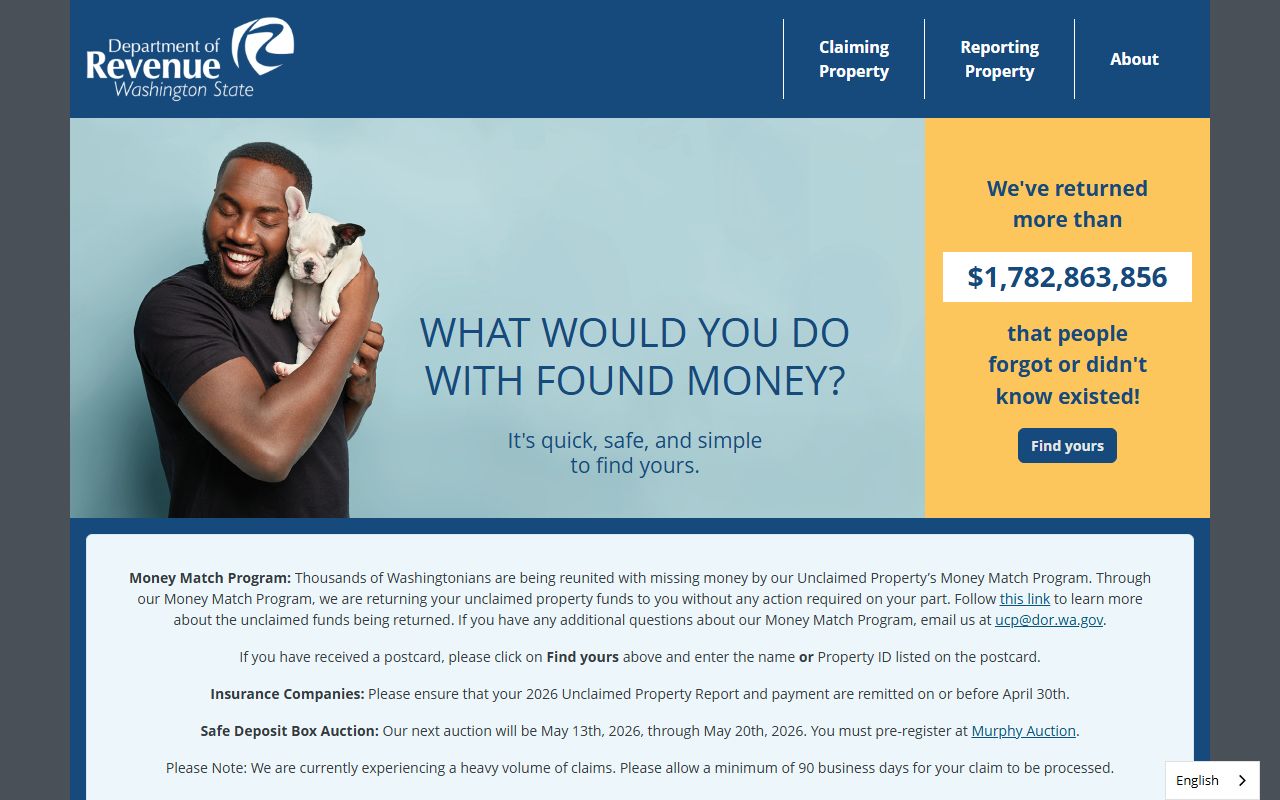
That portal is the broad statewide entry point, and it is where SeaTac claims ultimately begin once the city-side record is tied to the right owner.
The claim search form is the more specific state view when you already have a last name, business name, or Property ID.
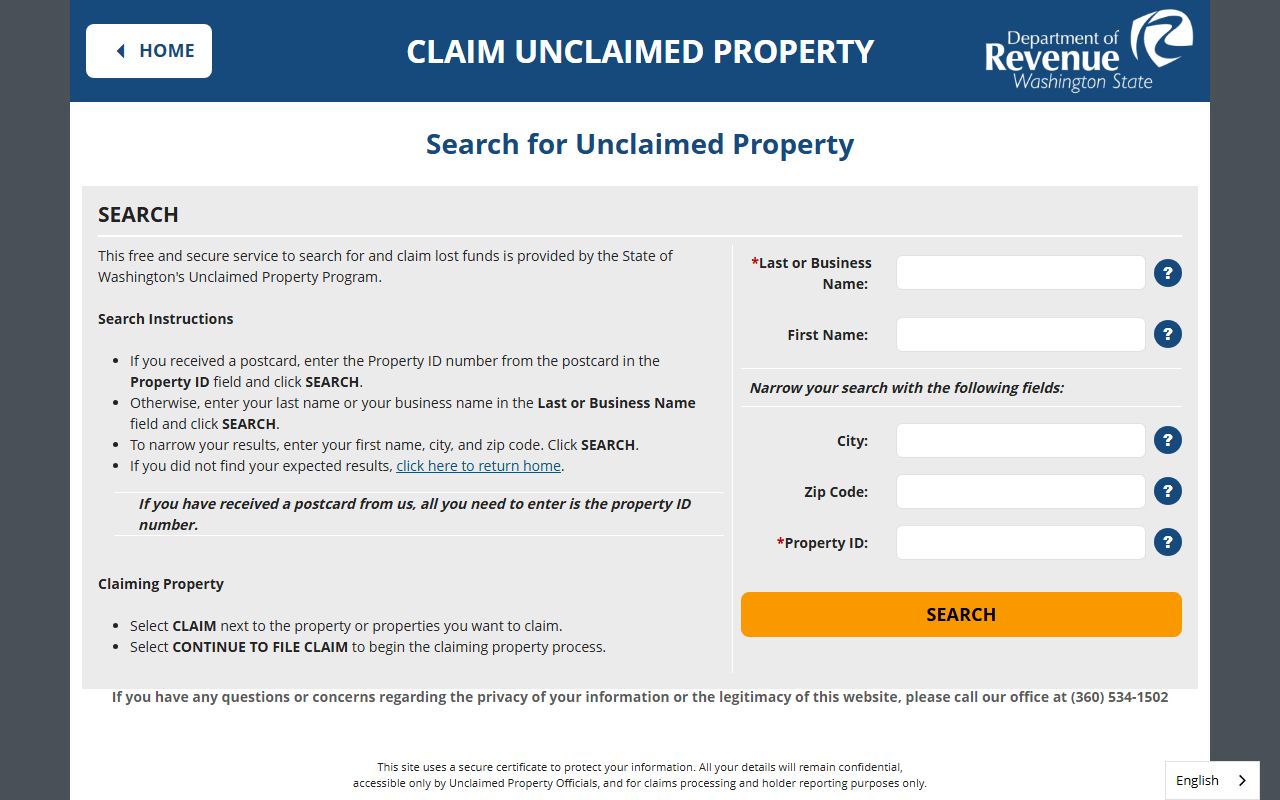
That form is useful because it turns a local SeaTac clue into a searchable Washington record without relying on a city database that does not exist in the same public format.
SeaTac Unclaimed Money Finance Records
SeaTac finance records are the best local clue when the missing item looks like a city payment rather than a physical object. Since finance sits under the City Manager, the office can explain whether a check was issued, reissued, voided, or reported to the Department of Revenue. That matters because a claim often starts with a payment history, not the state record itself. If you know the department, amount, or old payee name, the city finance trail usually tells you whether the state entry is the same item you are trying to recover.
The city's legal section also matters because SeaTac maintains an Unclaimed Property page there. Even without a city-wide public database, the legal path can point you to the right municipal contact or record type before you move into the claim search. That is especially helpful if the city record and the state record do not use the same wording. A finance memo, legal page, or code reference can make the difference between a plausible match and a claim-ready file.
| Finance structure | Under the City Manager's Office |
|---|---|
| Legal section | SeaTac maintains an Unclaimed Property page under Legal |
| Municipal code | seatacwa.gov/government/municipal-code |
| State law | Chapter 63.30 RCW |
For a SeaTac claimant, the main value of the finance trail is clarity. It shows which office created the payment, which local process touched it, and why it may now appear in the Washington database. That context is often enough to make the claim easier before any paperwork is uploaded.
SeaTac Unclaimed Money Search Steps
Start the search at Washington's claim search. Use a Property ID if you received a postcard, or search by last name or business name and narrow the result with first name, city, or zip code. That is the quickest way to see whether SeaTac unclaimed money has already been reported. Because SeaTac serves a high-mobility area, a current address alone may not match the reported file, so older addresses and business names are often the better search clues.
Once you identify a likely record, the state FAQ at ucp.dor.wa.gov/app/faq-claim and the claim status page at ucp.dor.wa.gov/app/claim-status-search are the next tools. The FAQ is where you check what proof the Department of Revenue may ask for. The status page shows whether a filed claim is pending, under review, or waiting on more documentation. SeaTac searches usually go faster when the city source is identified before the claim is filed, because the same record may have passed through legal, finance, or another city department first.
If the state file looks like a city payment, keep the City Manager finance details with the claim notes. If it looks like a city legal record, keep the city legal page and code reference with it. The goal is not just to find a match. The goal is to show why the match belongs to this claimant and this office path.
SeaTac Unclaimed Money Police Property
SeaTac police property follows RCW 63.32.010. That is the current rule to use when the missing item is a physical object held by police rather than money held in a financial account. The distinction matters because a wallet, phone, tool, firearm, or evidence item belongs in the property and evidence workflow, not in the state unclaimed money portal. If a SeaTac item is in police custody, the release and disposition process is the one that decides what happens next.
That separate police path is important in a city like SeaTac because many records start as airport-adjacent property or public-safety items rather than city finance transactions. A physical item may be noticed, retained, auctioned, or destroyed under the custody rules before the owner ever sees a state claim. If the item is not money, the city finance office is not the right starting point. The police property process is.
Once you know the item type, the rest is straightforward. Cash and account balances belong in the Washington system. Physical property belongs in the police workflow. SeaTac works best when those two lanes stay separate from the first contact through the final claim or release.
| Police rule | RCW 63.32.010 |
|---|---|
| Money path | City finance under City Manager, then Washington DOR |
| Property path | Police custody and disposition workflow |
SeaTac Unclaimed Money Claims
After SeaTac unclaimed money appears in Washington's system, the claim itself stays with the Department of Revenue. The state wants enough proof to connect the claimant to the owner name reported by the holder, so ID, address history, and any city records that explain the original payment are important. If the owner changed names or the payment came from a city department, the best claim file is the one that keeps the local trail visible instead of treating the state record as self-explanatory.
SeaTac's city-side sources can improve the claim before it is filed. The City Manager finance page can explain whether the item was issued from city accounting. The legal page can help you identify whether the item followed a municipal process before it reached the state. Those details matter because a small city payment can be easy to overlook if you only search by the current address or a shortened business name. The cleaner the city record, the easier the state review.
Washington does not set a deadline for owner claims, so older SeaTac records are still worth checking. That helps former residents, former contractors, and anyone whose current address no longer matches the address on the original file. If the city source and state entry line up, the rest of the process is mostly about documentation and status tracking.
Public Records And Follow-Up
If you need the documents behind a SeaTac unclaimed money result, the City Manager finance path and the legal section are the best local sources. Keep the request narrow. A check number, department name, date range, or old payee name is easier to search than a broad request about everything tied to a person. That is especially useful when the city records may be split between finance and legal navigation rather than one public unclaimed-money list.
The Department of Revenue overview at dor.wa.gov/about/unclaimed-property-ucp is the best statewide companion page when you want the official explanation of how Washington holds reported property. Use it together with the city manager page, the city code, and the claim tools. That gives you the local source, the statewide holder, and the filing path in one workflow.
SeaTac searches work best when the city and state records are treated as parts of the same trail. The city explains the source, the state holds the reported property, and the claimant supplies the proof. Once those pieces are aligned, the claim becomes much easier to finish.