
Seattle Unclaimed Money Records
Seattle unclaimed money usually starts with the Washington state database, but the city also has its own finance, treasury, and police property resources that can point you toward the right office. If a city payment, refund, or evidence item was never picked up, the paper trail may pass through Seattle Finance and Administrative Services, the Treasury Services Division, or the Seattle Police evidence warehouse before it becomes part of a claim. Because Seattle is both the largest city in Washington and the county seat, local records are often tied to larger King County and state systems. A careful search starts with the state portal and then checks the city records that explain where the item came from.
Seattle Unclaimed Money Search
The best first search is still the Washington Department of Revenue portal at ucp.dor.wa.gov. That statewide database is where most Seattle residents look for reported property because it covers accounts, checks, deposits, and other unclaimed money held by banks, insurers, utilities, and public agencies. You can search by last or business name, narrow the results with a first name, city, or zip code, and use a Property ID if the state mailed you a postcard. The state claim search and claim status pages are especially useful when the name on the file is close but not exact.
Seattle residents who think a city agency issued the payment should also check the city finance pages at seattle.gov/financial-services. The Department of Finance and Administrative Services, through its Treasury Services Division, handles city investments and related financial records. The city also posts financial and audit reports at seattle.gov/city-finance/financial-and-audit-reports, which can help explain where a city payment came from and why it might appear in a public-record trail even if the actual cash is now reported through the state program.
When you are comparing possible matches, keep the city and county relationship in mind. A Seattle address may show up in both city and county records, and the right claim path depends on whether the money belongs to the state database, a city office, or a county treasury entry. That is why the search order matters: state first, city finance second, then any records that connect the two.
Seattle Finance And Treasury
Seattle City Hall is located at 600 4th Avenue, Seattle, WA 98104, and the Finance and Administrative Services office can be reached at (206) 684-8282. Those details matter when you need to ask whether a city payment, refund, or bookkeeping entry is connected to a later unclaimed record. The city’s Treasury Services Division handles city investments, so it is the right point of contact when the money you are trying to track appears in a city financial report rather than in the state claim database.
Seattle also maintains a comprehensive investment portfolio, which is why its financial records can be more detailed than a simple payment receipt. If you are trying to understand whether a payment was issued, transferred, or redirected into another fund, the city finance records can provide context that a state claim file does not always show. For that reason, a Seattle search often works best when the state database, city finance page, and any supporting invoice or account record are reviewed together.
For a visual reference, Seattle’s official city website at Seattle City Website shows the main public-facing portal for city services and financial information.
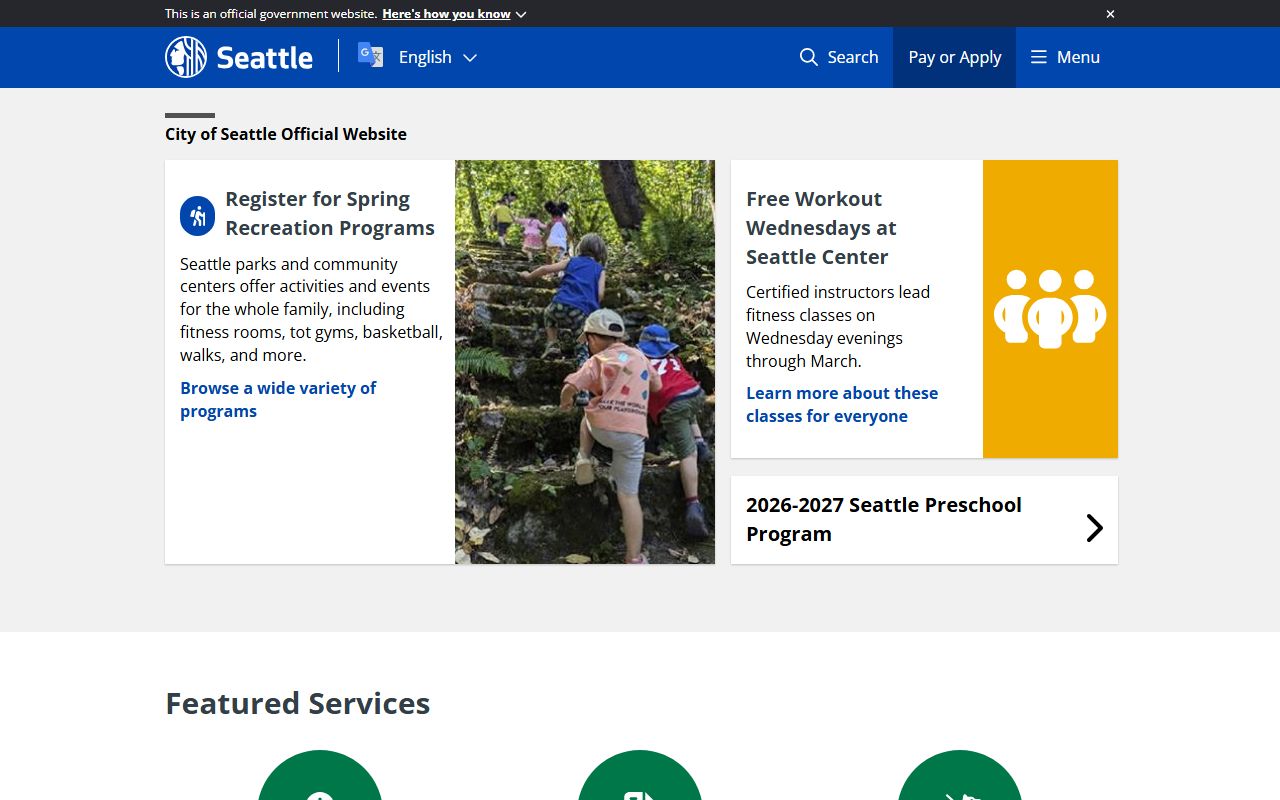
That city portal is a useful starting point when you want to confirm which department may have created the record before you file or follow up on a claim.
Seattle Unclaimed Money Claims
Most Seattle claims still move through the state unclaimed property system, so the paperwork usually follows Washington’s general claim rules. That means you should be ready to provide a government-issued ID, proof of current address, and supporting documents that connect you to the owner name on the record. If the claim involves a name change, estate matter, or business account, add the court papers or entity documents that show why you are authorized to claim the funds.
If the money came from the city, the city finance office may be able to point you to the right record, but the actual claim still depends on matching the record to your proof. The city’s financial pages and report archive can help you understand the source, while the Department of Revenue handles the state-level claim workflow and status tracking. In practice, Seattle claimants do better when they use both sources together rather than assuming one office has the whole answer.
When a file is ready to submit, keep a copy of everything you send and note the date. If more documents are requested, you will want the original search details, the property ID if there was one, and the office or webpage where you found the record. That small paper trail is often enough to avoid repeating a search later.
Seattle Police Evidence And Property
Seattle also has physical property that can be reclaimed separately from cash. The Seattle Police Evidence Warehouse is at 730 South Stacy Street, Building C, Seattle, WA 98134, and property reclaim is by appointment only. The phone number is (206) 684-8737, and the city’s reclaim evidence page is seattle.gov/police/need-help/services/reclaim-evidence. If your search turns up a phone, bag, jewelry, or another item instead of money, this is the office that matters most.
Seattle’s handling of police auction proceeds and unclaimed property is tied to municipal policy and state law, including RCW 63.32.010 and RCW 63.40.010, along with the city’s own procedures. Research notes that auction proceeds go to a special fund under city code, and official statements also describe water fund treatment for certain police auction proceeds of unclaimed property. That means the item itself may no longer be in storage even if the money from a sale is still traceable through city records.
Because the warehouse is appointment based, Seattle residents should not expect a walk-in pickup. The better approach is to confirm the item, verify the reclaim steps, and gather whatever ownership proof the warehouse asks for before the appointment. That saves time and reduces the chance of a second trip.
Seattle Unclaimed Money And Code
The Seattle Municipal Code chapter most often connected to this topic is Chapter 5.80, and Ordinance 120794 is another useful city reference. Both help explain how Seattle handles certain funds and property that no longer has an active owner in city custody. For a direct look at the ordinance, the city clerk page at clerk.seattle.gov/search/ordinances/120794 shows the local code reference used in the research.
For a visual reference, the city clerk ordinance page at Seattle Ordinance 120794 shows the municipal code source tied to Seattle’s unclaimed-money rules and related fund treatment.
That code link is helpful when you want the city rule, not just the claim form, because it shows the local framework behind the record.
Seattle’s finance and code references do not replace the state unclaimed property search, but they do explain how the city manages its own records when money or property moves out of direct city custody. If you are trying to connect a city payment to a state claim, the ordinance and the finance report often provide the missing bridge.
Seattle Unclaimed Money Records Show
Seattle records can show different details depending on the source. A state-held property record may include the owner name, address, and claim status, while a city finance record may show the department, fund, or payment history that led to the unclaimed entry. A police property record can show the item type, appointment process, or reclaim status. When you look at those records together, the pattern becomes clearer and you can tell whether you are dealing with money, an evidence item, or a municipal accounting entry.
That distinction is important because not every Seattle record is the same kind of claim. A city refund, a police auction item, and a state unclaimed-property entry all follow different workflows even if they started with the same address or name. If the record is tied to a person who moved, changed names, or closed a business, bring the documents that connect the old and new information so staff can match the file without guessing.
For many Seattle residents, the cleanest workflow is simple: search the state database, check city finance if the source looks municipal, and use the police reclaim page if the item is physical. That keeps the search organized and avoids sending a claim to the wrong office.
Seattle Unclaimed Money Resources
Use the state claim pages at ucp.dor.wa.gov/app/claim-search and ucp.dor.wa.gov/app/claim-status-search to follow a Seattle claim from search to status. If you need a definition or the state rules in one place, the DOR overview at dor.wa.gov/about/unclaimed-property-ucp and the FAQ at ucp.dor.wa.gov/app/faq-claim are the best official references. Those links are useful whether the record started with the city, the county, or a business holder that later reported the property to Washington.
Seattle is a good example of why unclaimed money searches can take more than one stop. The city has finance records, the police have a separate reclaim process, and the state still holds the main unclaimed property database. If your first result is not an exact match, do not stop there. Compare the name, location, department, and date fields, then follow the path that best fits the record. A Seattle search is usually successful when the claimant matches the paper trail instead of forcing the paper trail to match a guess.
Once the file is matched, the rest is documentation and timing. Keep your proof together, submit it to the correct office, and track the status until the claim is resolved.