
Island County Unclaimed Money Records
Island County unclaimed money can run through several different local paths, so the first step is deciding whether the record belongs to the state, the treasurer, foreclosure surplus funds, or the sheriff. Coupeville is the county seat, but the county also serves Whidbey Island and Camano Island, which makes the tax and payment workflow a little broader than a single-office search. That is why the state portal is the first screen, while the county pages tell you which local office actually created or holds the record. When the source is clear, the claim process becomes much more predictable.
Island County Unclaimed Money Search
The Washington Department of Revenue portal at ucp.dor.wa.gov is the main statewide search tool for Island County residents. That site is where dormant property is reported, held, and claimed, so it should always be the first stop for a name search or Property ID lookup. The Department of Revenue also explains the program at dor.wa.gov/about/unclaimed-property-ucp, which is useful when you need to understand why a record may have been reported even though the county still has source paperwork.
Island County's local site at islandcountywa.gov helps you narrow the search once you know the record may be local. The tax-bill page at islandcountywa.gov/287/Tax-Bills-Payments is especially helpful because it points to the treasurer function, payment timing, and tax statement handling. If a result came from a county payment or tax account, that page is the office trail you need before you file anything with the state.
Island County is also one of the few counties in this batch with a separate foreclosure surplus page, which means not every money issue belongs in the same claim lane. That makes the county search more layered than a simple check for an old warrant. A careful review of the owner name, property address, and source department is the fastest way to separate a state-held account from a county surplus file.
Treasurer and Tax Bills
The Island County Treasurer is Diane H. Madsen, and the main office is at 1 NE 7th St, Suite 111, Coupeville, WA 98239. The mailing address is PO Box 699, Coupeville, WA 98239, and the office phone is (360) 679-7302 with fax service at (360) 679-7333. The treasurer page and the tax-bills page are the most useful local references because they show where tax statements are handled and where residents can ask about county payment history.
The county's tax page also explains the practical payment rhythm. Tax statements are mailed during February, the first half is due by April 30, and the balance is due by Oct. 31. That matters for unclaimed money searches because a tax payment, refund, or parcel record can be the source line behind a later match. If the name on the record is close but the address is old, the tax bill history can help you confirm the right owner before you claim.
Island County also provides local phone numbers for different service areas, which is helpful if the office directs you to a specific branch or Camano contact. The bottom line is simple: if your search looks tax-related, the treasurer page is more useful than the general county homepage. It is the place where the county's payment structure and the search trail meet.
Island County Unclaimed Money Claims
Once a match is found in the state portal, Island County research says to contact the treasurer for county warrants and complete the claim form with photo ID and proof of address. Claims over $250 require a notarized affidavit, and the expected processing time is 2 to 3 weeks once the packet is complete. That is a practical reminder that the office needs enough documentation to connect the claimant to the original record without guessing.
A strong Island County claim usually includes the full legal name, current mailing address, and any older address that appears in the search result. If the claim is for a business, include the entity paperwork that shows who may sign. If it is for a deceased owner, add the probate or heirship documents that explain why the claimant has authority. Those documents are what turn a possible match into a file the county can actually process.
Washington's current unclaimed property law is RCW Chapter 63.30, which is the state law behind the reported-property side of the process. County warrant handling is still a county function, so RCW 36.22.100 is the better local reference when the record started as a county payment. Those two citations help separate the state claim path from the source record path.
Foreclosure Surplus Funds
Island County has a separate foreclosure surplus page at islandcountywa.gov/634/FORECLOSURE-SURPLUS-FUNDS, and that is important because surplus proceeds are not the same as ordinary unclaimed property. The county research says the claim uses a separate form and follows a three-year claim period under RCW 84.64.080(10). If your search comes from a foreclosure or tax sale, this is the page that matters most.
That surplus process is more specific than a standard warrant claim because the owner of record at the time of the Certificate of Delinquency may be the only person entitled to the funds. The official county page also points people toward the collections deputy, which is a clue that the office is handling money tied to property proceedings rather than a routine accounting adjustment. If the file came from a sale or foreclosure, do not treat it like a generic state claim.
Island County's surplus fund page is a good example of why county research matters even when the state portal is the first search. The amount may sit in a county process for years before anyone notices it, and the right form depends on the property history. When the claim is tied to a specific parcel, the property address and foreclosure file number become just as important as the owner name.
Sheriff and Evidence Property
Island County's sheriff office is at 1 NE 7th St, Coupeville, WA 98239, with phone number (360) 679-9567 and email sheriff@islandcountywa.gov. The research notes say property release is by appointment only, which tells you this is a controlled evidence or found-property process rather than a normal money claim. If the search leads to a physical item, the sheriff is the correct office, not the treasurer.
That is where RCW 63.40 becomes relevant. Sheriff-held property follows sheriff procedures, so a money claim form is not the right tool for a wallet, keys, or another held item. Proof of ownership should be specific enough to match the item, and it is better to call first if you need to know what the office wants in the file.
Because the sheriff release is appointment-based, a claimant should be prepared with documentation before traveling. A receipt, case number, photo, or other unique identifier can help the office confirm the item faster. That saves time and prevents a second trip if the evidence custodian needs more detail than expected.
Island County Unclaimed Money Images
See the Island County official website for the countywide entry point that connects residents to tax, surplus, and law-enforcement offices.
That page is the broad starting point when you need to sort out whether the record belongs to the treasurer, surplus funds, or sheriff.
For tax records, the treasurer page at Island County Tax Bills and Payments shows the county payment workflow.
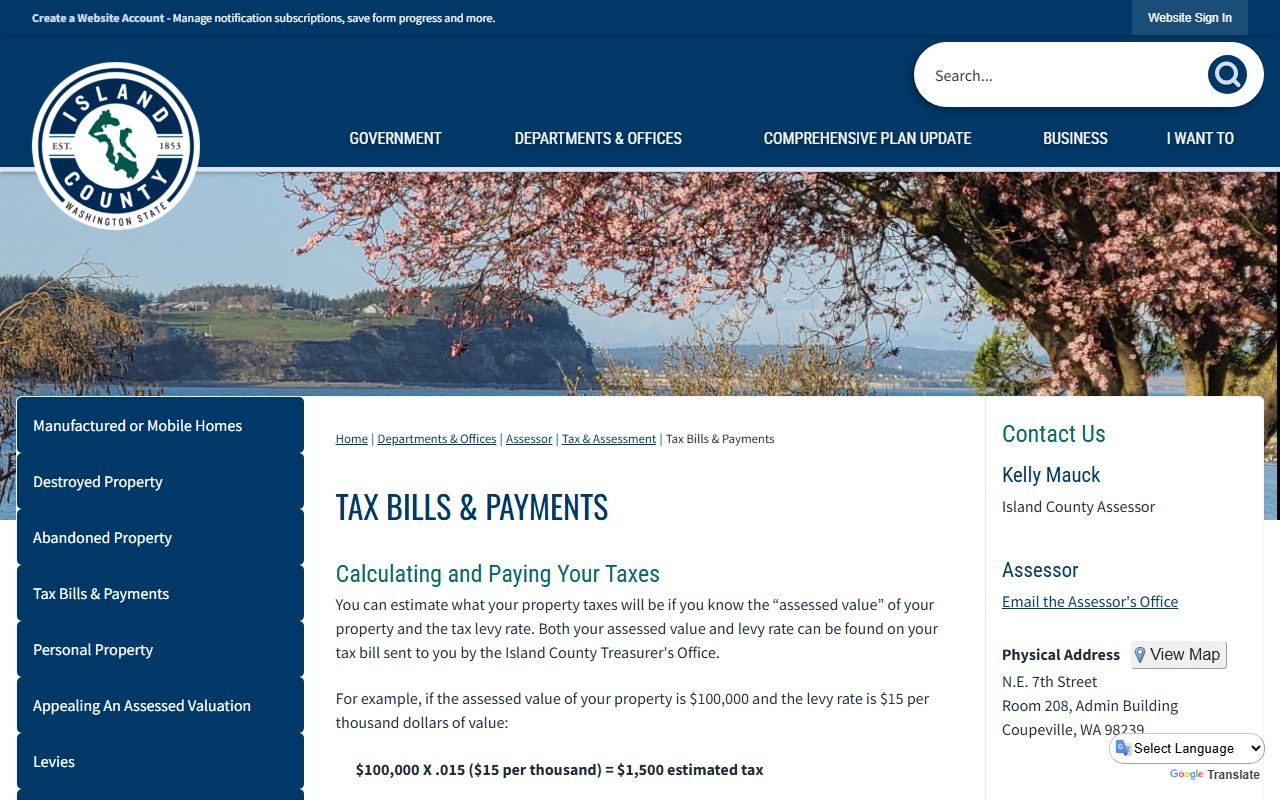
That view is the most useful local reference when an unclaimed money search is really a tax or payment-history question.
For surplus property from foreclosure, the county maintains a separate page at Island County Foreclosure Surplus Funds.
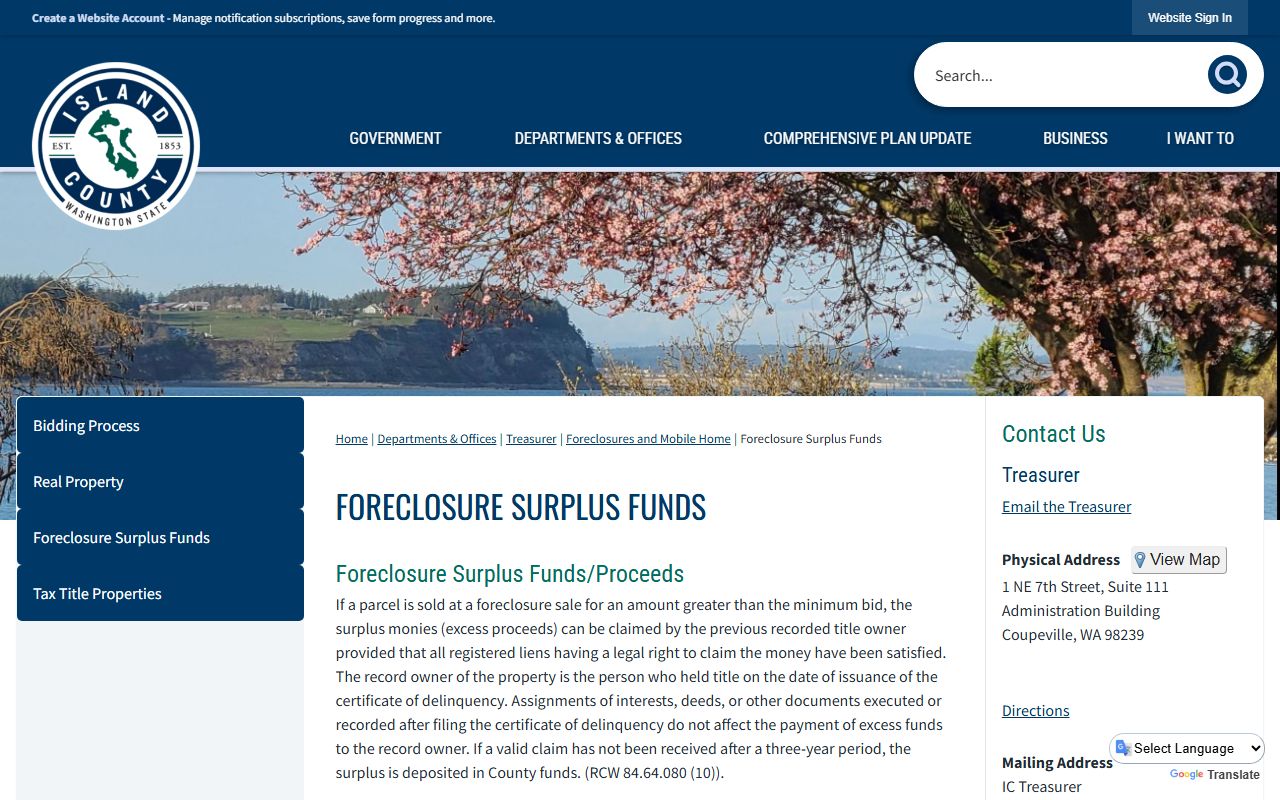
That page matters because surplus funds follow a different claim path and a different deadline than ordinary unclaimed money.
Island County Unclaimed Money Resources
Island County gives you enough local detail to keep the claim on the right track. Use the state search at ucp.dor.wa.gov/app/claim-search for reported property, use the county treasurer page for tax and warrant questions, and use the foreclosure surplus page if the money came from a tax sale. That sequence keeps the record type clear before you decide where to file.
The local pages also tell you what kind of proof matters. For a county claim, address proof and a notarized affidavit may be needed. For foreclosure surplus, the parcel history and the separate form are the key pieces. For sheriff property, appointment scheduling and ownership proof control the process. Each of those paths starts in the same county, but they do not end in the same office.
If you are returning to the search later, save the exact page you used and the date you checked it. Island County's mix of tax, surplus, and sheriff records can create more than one possible route, and a small note can keep the next step from turning into a second full search. Once you know the source, the claim usually becomes a straightforward document submission.