
Mason County Unclaimed Money Records
Mason County unclaimed money is usually easier to track once you separate the local source from the statewide claim process. In Shelton, the county treasurer handles the finance trail, county warrants are tracked internally, and residents are pointed toward Washington’s unclaimed property database when the money has already been reported. That means the county page is most useful as a starting map rather than the place where a public claim is filed. If you are comparing an old check, an accounting note, or a warrant number, the county details help you decide whether you are dealing with a county payment, a state-held asset, or a sheriff property issue that needs a different office.
Mason County Unclaimed Money Search
Start with the Washington Department of Revenue overview at dor.wa.gov/about/unclaimed-property-ucp, then move into the state claim search at ucp.dor.wa.gov/app/claim-search. Those official pages are the public path for money that has already been reported. They let you search by name, business name, or Property ID, and they are the fastest way to tell whether a Mason County result is actually sitting with the state. If the record is there, the claim process continues through the Department of Revenue instead of the county office.
The county’s own homepage at masoncountywa.gov is the best local entry point when you need context before filing. Mason County is seated in Shelton, the courthouse is at 419 N 4th St, Shelton, WA 98584, and the main phone number is (360) 427-9670. The treasurer can be reached at ext. 452, and the sheriff at ext. 313. That matters because county money questions often start as a phone call about a warrant, a refund, or a vendor payment rather than a search result.
If you get a close match but not a perfect one, compare the holder name, the issue source, and the kind of record before you assume it belongs to you. Mason County does not maintain a public searchable unclaimed property list, so the county side is mostly about confirming the origin of the payment and figuring out whether it was a warrant, a tax-linked entry, or a separate record that now belongs in the state system.
Mason County Treasury and Warrants
The Mason County treasurer manages county finances and keeps track of county warrants that do not get cashed right away. That internal tracking is important because the original check may never have been lost in the ordinary sense; it may simply have stayed outstanding long enough for the county to move it into the reporting pipeline. When that happens, the county is still the office that can explain the source, but the state is the place that holds the property for claim purposes.
For stale county warrants, RCW 36.22.100 is the current county-warrant statute to keep in mind. It says registered or interest-bearing county warrants not presented within one year of call, and other county warrants not presented within one year of issue, are canceled by the county. That rule does not replace the state unclaimed property process, but it does explain why a county payment can stop looking active long before an owner notices it is missing. In practice, the county treasury record and the state claim record often need to be read together.
If you are trying to follow a payment trail, the county phone number is usually more useful than a broad web search. A quick call to the treasurer at ext. 452 can confirm whether the item is still a county warrant, whether it has already been reported, or whether you need a different office entirely. That is especially useful when the name on the warrant is similar to yours but the issue date or department source needs to be checked before you file anything.
Mason County Unclaimed Money Claims
Once a Mason County item is reported, the claim belongs in Washington’s statewide system. Use the claim search at ucp.dor.wa.gov/app/claim-search and the claim FAQ at ucp.dor.wa.gov/app/faq-claim to see what kind of proof the Department of Revenue expects. The state explains who can claim property, including heirs and people filing for someone who cannot file on their own, so the FAQ is a good checkpoint before you upload documents or start a filing you may need to revise later.
Mason County claims work best when the county source and the state search result line up. If your record came from the treasurer, gather the paperwork that ties you to the owner name, such as a photo ID, old address proof, or documents showing a name change. If it is a business claim, add the entity paperwork so the state can connect the record to the company or trust that originally held the funds. The better the county paper trail, the less time the state has to spend asking follow-up questions.
If you want to see whether a filed claim is moving, the status page at ucp.dor.wa.gov/app/claim-status-search is the official tracking point. That can save time when you are waiting on a correction or a missing document request. Mason County does not run a separate public claim queue, so the status page is the closest thing to a public progress check once the county source has already been matched to the state file.
Mason County Found Property and Sheriff Records
Not every Mason County record is cash or a check. When the issue is a phone, wallet, tool, or other physical item, the sheriff’s office is the right local contact because found property is handled under RCW 63.40 rather than the ordinary unclaimed money workflow. That chapter covers how the sheriff may keep, sell, donate, or otherwise dispose of property after notice is given. In other words, a sheriff-held item can look similar to unclaimed money at first, but it follows a separate path once it is physically in law enforcement custody.
That distinction matters because the wrong office can slow everything down. If you are only dealing with a county warrant or a state-held account, the treasurer and the Department of Revenue are the relevant offices. If you are dealing with found property, the sheriff at extension 313 is the better starting point. Mason County’s published notice before disposition is the key clue that you are in a sheriff-property file rather than a money claim file, so it is worth checking carefully before you send documents anywhere.
Mason County Unclaimed Money Images
See the Mason County official website for the county’s main entry point when you need to confirm the correct office before following a claim or warrant trail.

That homepage is the quickest way to move from a broad county search to the treasurer, sheriff, or another local department.
The Washington Department of Revenue overview at Unclaimed Property (UCP) explains how the state holds reported property until the rightful owner files a claim.
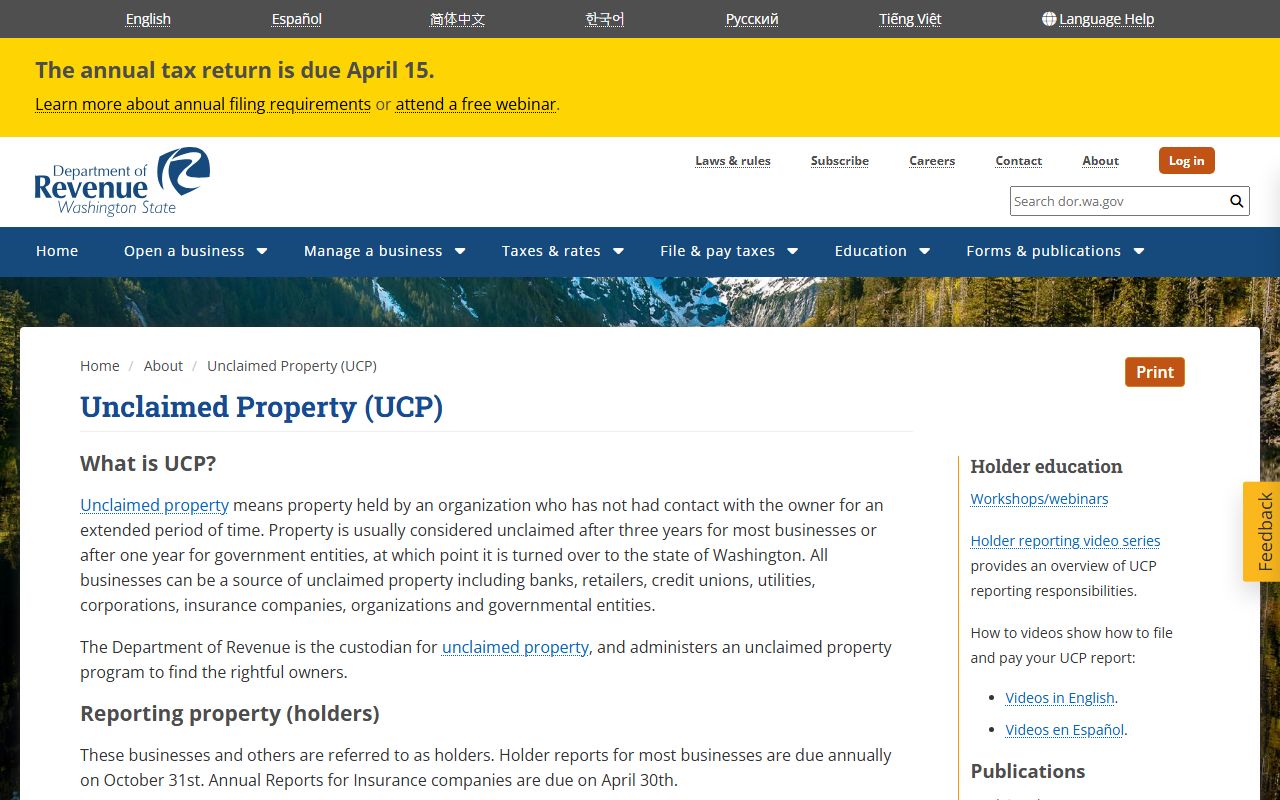
Use that state reference when the county record has already moved out of local accounting and into Washington’s claim system.
Mason County Unclaimed Money Resources
The most useful Mason County approach is to keep the record source and the claim source separate. The county homepage gives you the local office structure, the treasurer confirms whether a check or warrant began at the county level, the sheriff handles found property, and the Department of Revenue handles the statewide claim. That division is not just administrative. It determines whether you need proof of ownership, a records request, or a sheriff-property inquiry before you can move the file forward.
For the state-side path, the best official tools are the main UCP site at ucp.dor.wa.gov, the claim search page, the claim FAQ, and the status search page. Those pages tell you whether property has been reported, what documents you may need, and whether a filed claim is still pending. Once you know the record is truly in the state system, Mason County becomes a source of background, not the final filing destination.
For local warrant questions, RCW 36.22.100 gives you the county-cancellation rule, and for sheriff-held property, RCW 63.40 gives you the disposition framework. Those two laws matter because they explain why Mason County can have more than one unclaimed-money path at the same time. A check, a warrant, and a found item can all start in the same county, but they do not end in the same place.