
Spokane County Unclaimed Money Records
Spokane County unclaimed money searches usually begin with the Washington Department of Revenue, but the county itself adds the records that matter when a payment, tax balance, distraint action, or sheriff property issue is involved. That makes the county website useful for more than one kind of search: it can help you trace a property tax history, review a foreclosure path, or figure out whether a county-held item belongs in the state unclaimed property system at all. If you are working from an old address, a tax notice, a warrant clue, or a property ID from the state, the fastest path is to match that clue to the right county office before you decide what to claim.
Spokane County Unclaimed Money Search
The state unclaimed property portal at ucp.dor.wa.gov/app/claim-search is still the first place to check for Spokane County unclaimed money. Washington's current unclaimed property law is in RCW Chapter 63.30, and the Department of Revenue holds reported property until the rightful owner claims it. That means a county resident may find a bank balance, uncashed payment, insurance item, or other reported property in the state database even when the county has no separate public listing. The search works best when you have a last name, business name, or postcard Property ID.
Spokane County also has local tools that help narrow the issue. The county treasurer handles foreclosure proceedings, distraint actions, and property tax collection, so any record tied to delinquent taxes or a tax sale should begin there rather than with the state claim form. The county website offers a property search tool and a foreclosure/distraint page that explain whether the issue is a tax payment, a pending foreclosure, or something else entirely. That distinction matters because the paper trail for a county tax matter looks different from the ordinary state-held unclaimed property record.
For people who want a direct county starting point, the treasurer's foreclosure and distraint page at spokanecounty.org/804/ForeclosureDistraint is the most targeted place to begin. It sits alongside the county's broader search tools and is the cleanest source when the missing money is tied to tax collection, notice, or a sale process rather than a typical refund.
Spokane County Unclaimed Money Images
The county's main website is the broadest entry point for county services and records. Visit the Spokane County official website if you want to confirm which office handles your issue before you move into a claim or records request.
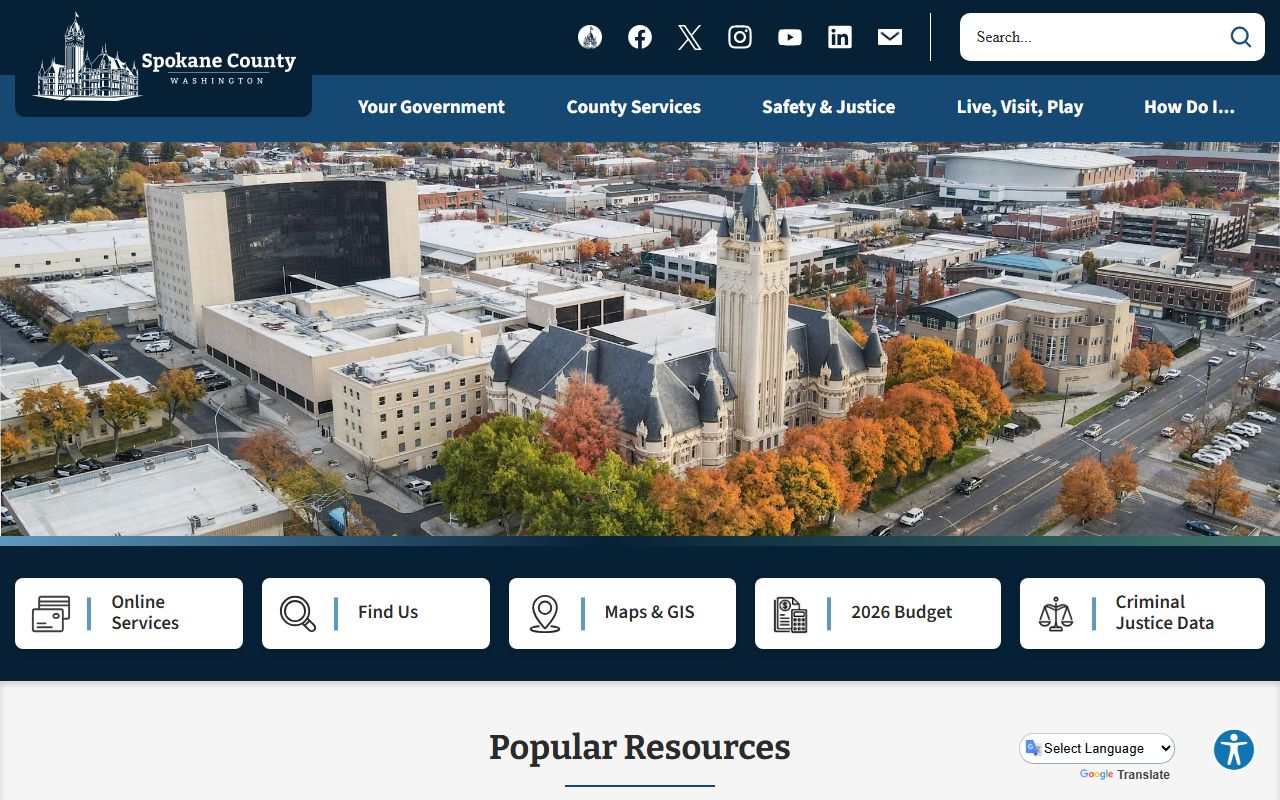
That homepage is the fastest way to pivot from a search result to the correct county department.
The county foreclosure and distraint page is the narrower tool when your search involves taxes, notice, or a pending sale. Open the Spokane County foreclosure and distraint page for the process that sits closest to delinquent property tax collection.
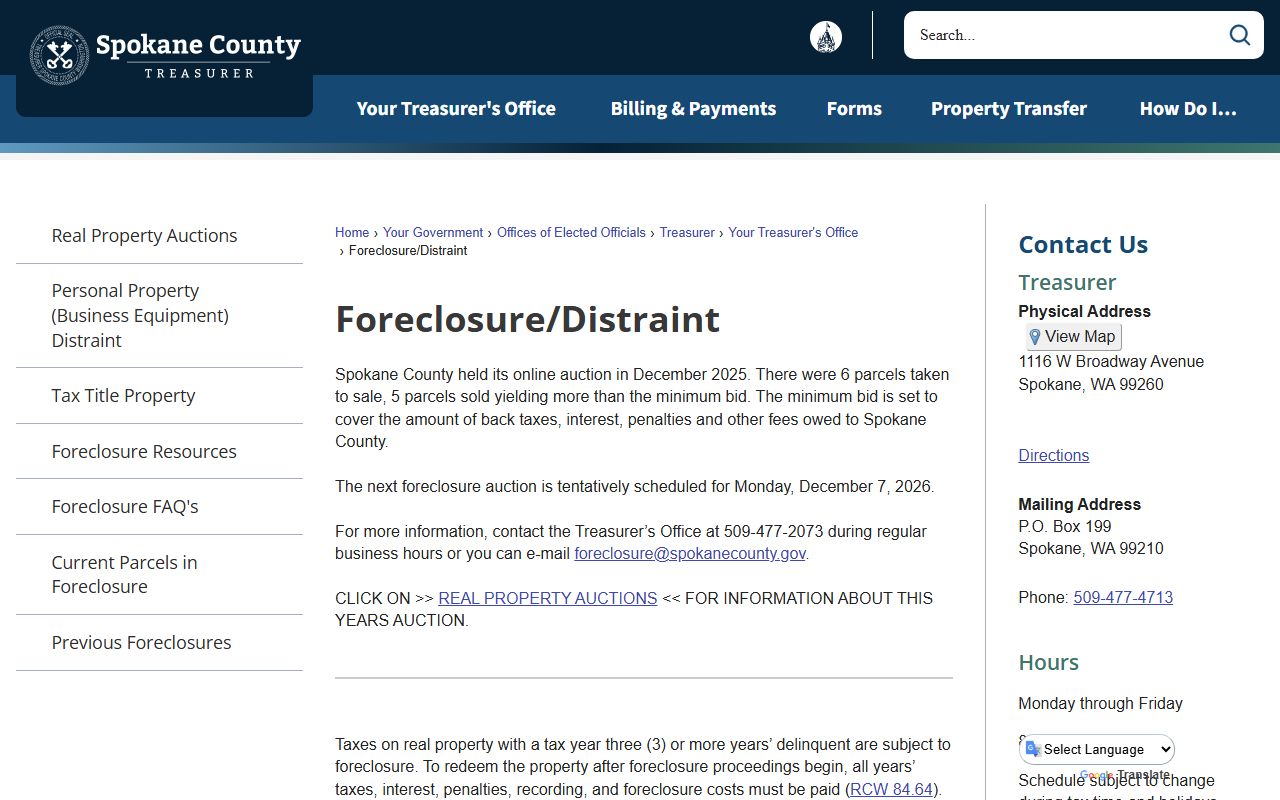
If your search points to a tax issue, that page gives you the county procedures that matter before a record becomes harder to unwind.
For the county's separate unclaimed remains information, the official county resource at spokanecounty.gov/864/Unclaimed-Remains provides another example of how Spokane County organizes local property and records by subject matter.
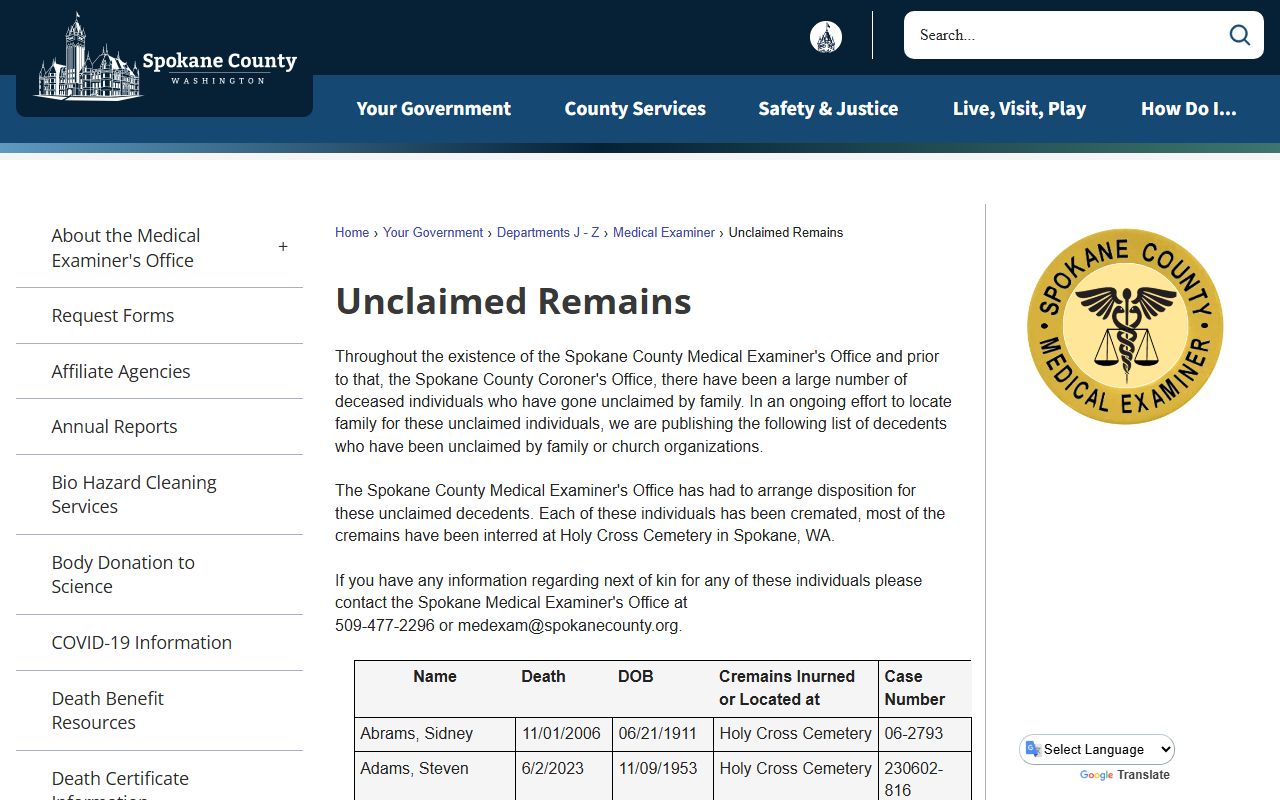
That subject-specific page is useful when you need to distinguish ordinary money from county-held property that falls under a separate public process.
County Tax and Foreclosure Records
Spokane County's treasurer is the office to watch when the record came from property tax collection or distraint rather than a routine refund. The county uses foreclosure proceedings under RCW Chapter 84.64, which is the state lien foreclosure chapter that governs notice, judgment, and sale. That matters because a county tax balance can follow a very different paper trail than a state unclaimed property entry. A record that starts as a delinquent tax issue may end up in foreclosure or sale notices before anyone thinks to search for it as unclaimed money.
County property search tools can also give you a broader payment history. If the issue is an overpayment, a tax credit, or a parcel question, the search may show enough context to explain why the county still has a source record even after the balance is no longer obvious in the public-facing system. Those records are often more useful than a simple yes-or-no search result because they show the line between a current account, a delinquent tax file, and a closed matter that still has a reporting trail.
For someone trying to recover money, the practical move is to start with the county office that created the debt or handled the collection, then move to the state claim database if the money was reported out. That sequencing saves time and avoids filing a claim against the wrong office. Spokane County's treasurer resources are built for exactly that kind of sorting.
Spokane County Unclaimed Money Claims
Once Spokane County unclaimed money reaches the state portal, the claim process shifts to the Department of Revenue. The search page allows last-name or business-name searches, and the state also lets you narrow results with first name, city, and zip code. That is helpful in a county as large as Spokane because the same surname can appear in more than one city, and a tax or payment record may not match your current address. If you received a postcard, the Property ID can take you straight to the reported record.
Claims work best when you can connect the state result to a county source document. A tax notice, a property search record, a foreclosure reference, or a treasurer printout can help prove that the state entry belongs to you. If the county still has a file, it may also show the original office name, the property number, or the date a balance moved into a delinquent or reportable status. That extra layer is often what turns a vague state search into a complete claim packet.
Washington's claim guidance makes it clear that there is no deadline for filing, so older Spokane County records are still worth checking. That is especially true when the property was tied to a home sale, a tax payment, a business closure, or an old county check that was never negotiated.
Sheriff Property And Records
Not every Spokane County search is about cash. The sheriff may handle evidence, found property, or seized property auctions, and those items follow RCW Chapter 63.40 rather than the state unclaimed money claim path. The sheriff side matters when the item is physical property rather than a payment or account balance. If you suspect that the missing item was taken into custody, treated as evidence, or listed for auction, the sheriff's procedures are more important than the state claim form.
The useful habit here is to separate money from property. Money usually starts in the state unclaimed property system or the treasurer's payment records. Physical items usually start with the sheriff, the county property process, or a public notice of sale. Spokane County's official site is where you can confirm which office owns the file, and the county's public auction and notice pages help show whether the item is still available or already disposed of.
Spokane County Unclaimed Money Records
The best Spokane County records are the ones that tell you what kind of record you are actually looking at. A tax file, a distraint notice, a sheriff property record, and a state-held unclaimed money entry all answer different questions. When you are looking at the state portal, focus on the holder name and property type. When you are on the county site, focus on the department, parcel, or foreclosure reference. If the record came from the county treasurer, it probably belongs in the tax or payment workflow first, not in the generic claim workflow.
That distinction is especially useful for searchers who have moved away from Spokane County. A former resident may no longer recognize the address, and a business owner may not remember which county office issued the original check or tax correspondence. The county pages provide the local clue that a statewide search can miss. Once you match the record to the right office, the claim path becomes much easier to follow.
For a cleaner paper trail, keep a copy of the result page, note the parcel or property ID, and compare the county source with the state record before filing anything. That simple discipline prevents duplicate inquiries and gives the county or state reviewer a much better starting point.