
Whitman County Unclaimed Money Records
Whitman County unclaimed money is usually easier to track once you connect the state claim search with the county office that created the paper trail. In Colfax, the treasurer’s office handles property tax collection, foreclosures, mobile home transfers, and the county’s treasury functions, so it is often the best local source for a tax bill, refund, surplus amount, or delinquent account. If you only have a last name, old address, or parcel number, start with the Washington portal and then use Whitman County records to confirm where the money originated before you submit anything.
Whitman County Unclaimed Money Search
The statewide starting point is Washington’s unclaimed property portal at ucp.dor.wa.gov, with the claim search page at ucp.dor.wa.gov/app/claim-search. That is where the Department of Revenue holds reported property under RCW Chapter 63.30, the current Washington unclaimed property law. The portal is the right place to look for property reported by banks, insurers, businesses, and government entities, and it is the fastest way to check whether a Whitman County name, business, or mailing address appears in the state system.
Whitman County’s local reference point is the treasurer page at whitmancounty.gov/306/Treasurer. Chris Nelson serves as treasurer, and the office is located at 400 North Main Street in Colfax with a mailing address of P.O. Box 550, Colfax, WA 99111. The office phone is 509-397-6230, the fax number is 509-397-5580, and the email contacts include trstaff@whitmancounty.net and treasurer@whitmancounty.net. Hours are 9 a.m. to 5 p.m. Monday through Friday, which matters when you need a quick source check before filing a claim.
TaxSifter at terrascan.whitmancounty.net/Taxsifter/Disclaimer.aspx is the county’s practical bridge between an address, parcel, or owner name and the tax side of the record. It is especially helpful when a state match looks close but not exact. If a property has been sold, split, or changed hands, the county tax search can show whether the apparent owner, parcel, or mailing address changed before the property was reported to the state. That extra step often saves time because it shows which county file should support the claim.
Whitman County Records and Tax Collection
Whitman County property tax records add the kind of detail that often explains an unclaimed money result. Tax statements are mailed from Colfax in late February or early March, first-half or full payments are due by April 30, and the second-half payment is due by October 31. The county page also notes that tax balances under $50 on individual parcels must be paid in full with the first half, and that delinquent tax amounts on a statement do not include the current month’s interest and penalty. For someone sorting out a county payment, those small timing details matter because they can explain why a refund, excess payment, or balance went quiet before it was reported elsewhere.
Delinquent interest and penalties are another local clue. Whitman County states that if the first-half taxes on real estate, mobile homes, or personal property are not paid by April 30, interest is charged at 1 percent per month under RCW 84.56.070 and RCW 84.56.090. That is not unclaimed money law, but it often explains how a county account grows into a larger balance, especially when the owner has moved or the mailing address is outdated. If you are tracing a county refund or an overpayment, the treasurer’s office can help show whether the amount stayed local long enough to be part of the tax cycle.
Whitman County is also direct about foreclosure and sale. Once the treasurer files a Certificate of Delinquency in Superior Court, the county starts foreclosure procedure, and all tax, interest, penalties, and costs must be paid through the current year to remove the property from foreclosure. Whitman County says that real estate with delinquent taxes for three years or more can be subject to foreclosure, and the county conducts tax foreclosure, tax-title, and surplus property sales through the treasurer’s office. Those sales are not the same thing as unclaimed property reported to the state, but they can create related surplus funds or refund questions that are worth checking before you assume the money is lost.
Mobile home records are another useful local detail. Whitman County says the treasurer issues mobile home movement permits and warns that moving a mobile home without the permit may result in a penalty under RCW 46.44.175. The same county guidance ties mobile home ownership changes to possible property or excise tax liens under RCW 84.60. If a claim involves a mobile home title, an ownership change, or a payment that should have followed the title record, those details can point you to the treasurer before the matter ever reaches the state unclaimed property system.
Whitman County Unclaimed Money Claims
Once you find a possible match in the Washington system, use the claim tools at ucp.dor.wa.gov/app/claim-status-search and ucp.dor.wa.gov/app/faq-claim to see what the state needs next. The status page is useful when a claim is already in the queue, while the FAQ explains who may file, what proof is acceptable, and how heirs or personal representatives document authority. Washington also makes clear that there is no filing deadline for owners, so the better question is not whether you missed the window but whether your documentation matches the reported record closely enough to move it forward.
Whitman County can still help after the state claim is open because the local office may know the original department, parcel, or payment source. If a county tax entry, mobile home transfer, or foreclosure surplus is the origin, the treasurer’s staff can often identify the right file faster than a broad statewide search can. That is why the county contact details matter: 509-397-6230 for the treasurer, trstaff@whitmancounty.net for general office questions, and treasurer@whitmancounty.net when you need a direct follow-up. A short call can confirm whether the county still has a document you should attach before you upload anything to the state portal.
For claims involving heirs or estates, keep the relationship between the county source record and the state claim as clean as possible. A death certificate, probate document, or name-change record is more persuasive when it lines up with the same owner name, parcel number, or mailing address that appears in the county file. The state claim process is designed to hold property until the rightful owner comes forward, but the county records usually show why the money became dormant in the first place. Matching those two layers is the most reliable path to approval.
Whitman County Unclaimed Money Property Sales
Whitman County’s auction and surplus pages are useful when the question is not a standard bank-style unclaimed property entry but a county sale that may produce excess proceeds. The county’s property and surplus auction page at whitmancounty.gov/338/Property-and-Surplus-AuctionSales and the purchasing page at whitmancounty.gov/339/Purchasing-Property-from-Whitman-County explain that tax foreclosure sales and surplus sales are handled through the treasurer’s office, often with Public Surplus. The foreclosure page at whitmancounty.gov/340/Tax-Foreclosure notes that the owner of record at the time the Certificate of Delinquency was filed can claim surplus money for up to three years after the actual sale. That surplus is not the same as general unclaimed property, but it is a good example of why county sale records matter when money is left behind.
The surplus property page at whitmancounty.gov/342/Surplus-Property gives another local path. County-owned parcels that are declared surplus can be sold by auction or private sale, and the county says most tax title and surplus property has already been liquidated. Even so, the page is still worth checking because it shows how Whitman County separates ordinary property tax collection from county-owned property sales. If you are looking at a notice, a deed, or a sale document, the county auction pages can tell you whether the money stayed with the treasurer or moved into a surplus sale process.
Property sales also explain why a treasurer file sometimes looks like unclaimed money but is really a redemption, a surplus, or a title issue. A tax foreclosure sale may produce excess funds, while a mobile home transfer can involve both taxes and excise filings before the title moves. Those are different legal tracks, but they all run through the treasurer’s office. That is why it helps to review the county sale pages first instead of jumping straight to the state claim form. If the source is a sale, the county record may answer the important question before the claim even starts.
Whitman County Unclaimed Money Images
Whitman County’s official website at whitmancounty.gov is the broad county entry point for treasurer, assessor, and public records navigation.
Use the homepage when you need to move from a state search result into a county office that can confirm the source of the money.
The Whitman County Treasurer page at whitmancounty.gov/306/Treasurer is the best local page for collection, foreclosure, surplus, and contact information.
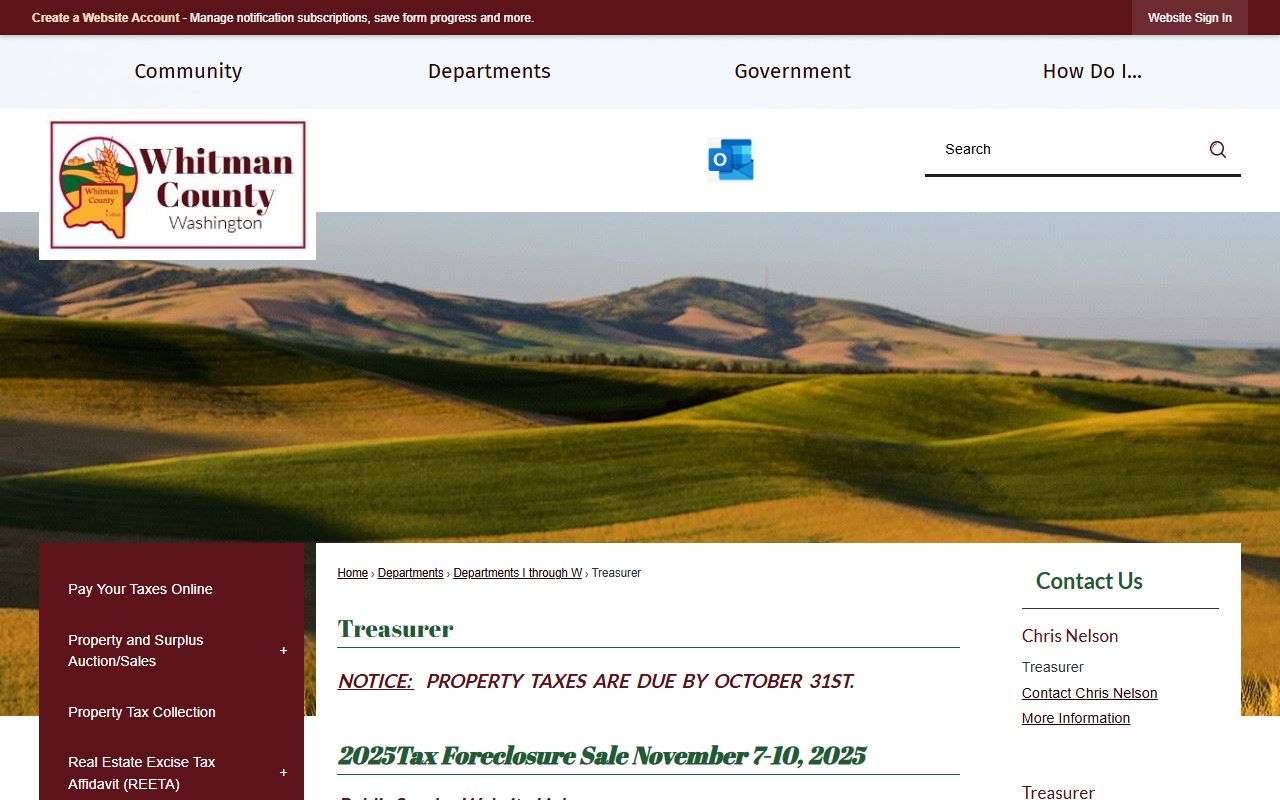
That office page is where you can confirm hours, payments, and the treasurer’s current responsibilities before you mail anything.
TaxSifter at terrascan.whitmancounty.net/Taxsifter/Disclaimer.aspx is the county’s tax lookup gateway and the best place to compare a parcel record with a state claim.
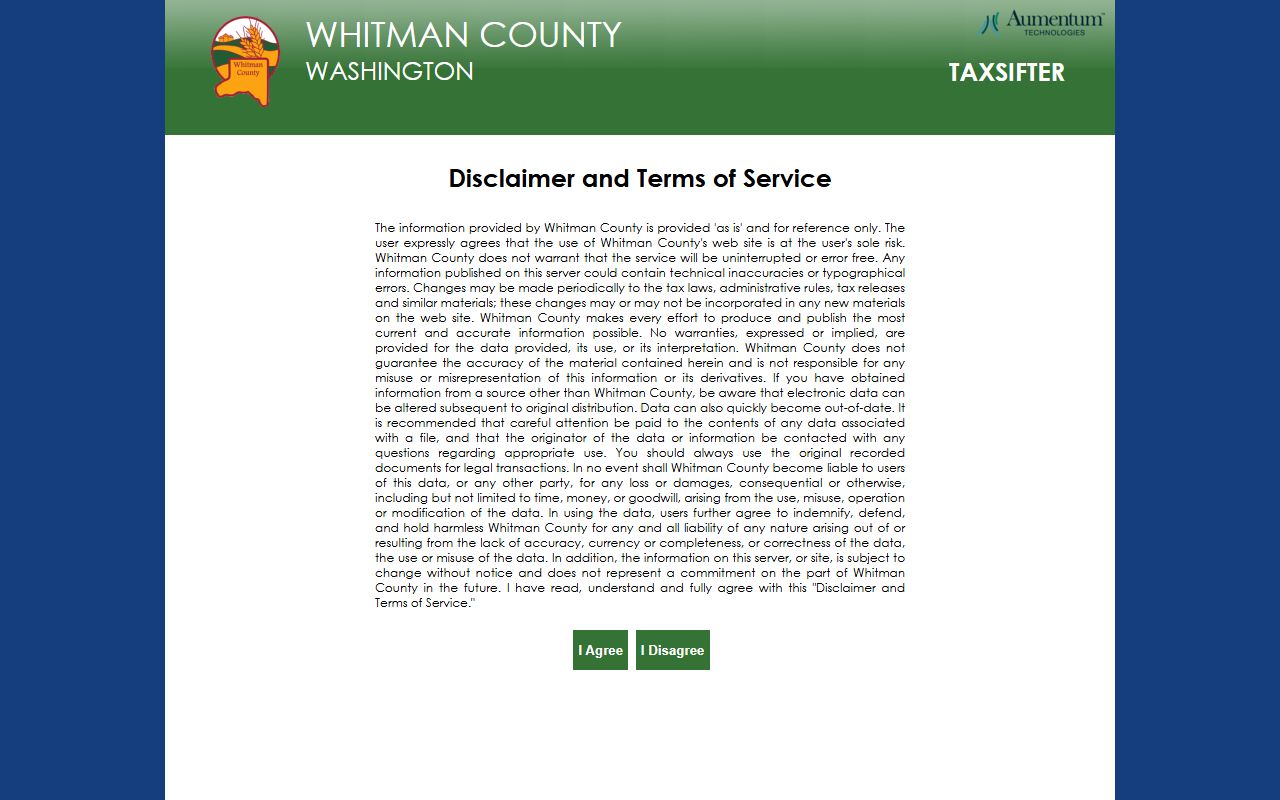
That search page helps you connect names, parcels, and tax history when the state record alone is not enough to prove the match.
Whitman County Unclaimed Money Resources
The most useful official Whitman County resources are the county main website at whitmancounty.gov, the treasurer page at whitmancounty.gov/306/Treasurer, the property tax collection page at whitmancounty.gov/332/Property-Tax-Collection, and TaxSifter at terrascan.whitmancounty.net/Taxsifter/Disclaimer.aspx. Those pages cover the local office that bills and collects taxes, the timing of payments, and the search tool that can show whether an address or parcel is tied to a county account. If you are trying to understand a dormant payment, that local sequence is usually the fastest way to identify the source.
For state-level filing, Washington’s unclaimed property portal at ucp.dor.wa.gov remains the final destination for reported property, with the claim search, status search, and claim FAQ available at claim search, claim status, and claim FAQ. The legal framework is RCW Chapter 63.30 for unclaimed property, with RCW 84.56.070 and RCW 84.56.090 for delinquent interest, RCW 84.60 for mobile home lien concerns, RCW 84.68.20 for payment under protest, and RCW 46.44.175 for mobile home movement permits. Using the right citation matters because tax collection, foreclosure, and state-held unclaimed property do not move through the same process.
For Whitman County, the best habit is simple: check the state portal, verify the county source, and then use the treasurer or tax search pages to support the claim. That approach avoids confusion between a tax balance, a foreclosure surplus, a mobile home transfer, and a true unclaimed property report. When the source is clear, the paperwork is usually straightforward and the county record is much easier to match to the state file.